
The city of Las Palmas has been the setting for the start of the pilot training action of the European Ediltrophy project, an initiative framed within the ErasmusPlus program. This first training phase is specifically aimed at technical personnel and focuses its modular program on the effective integration of digitalization tools and the strict application of sustainability criteria within the construction processes of dry systems.
The start of the sessions marks the practical deployment of a continental strategy aimed at training the professional workforce and driving the technological transformation of a sector undergoing modernization.
The building sector in the European Union faces a profound structural transformation motivated by the urgency to reduce environmental impacts, increase industrial safety, and solve the shortage of qualified labor. In this scenario, dry construction systems have emerged as an effective technical solution that allows raising work quality, optimizing execution times on site, and mitigating the ecological footprint of traditional processes. However, the gap in technical implementation and the imbalance in vocational training between different countries in the European region have highlighted the need to articulate shared competency frameworks.
A pedagogical design based on gamification and digital skills
To respond to these regional mismatches, the European Ediltrophy project has structured a working methodology that combines rigorous industry analysis with the use of advanced technological tools. The methodological strategy began with an initial analytical phase in the member countries to map the regulatory landscape, identify training gaps, and inventory the actual skills demanded by the labor market. On this basis, experimental training itineraries have been designed, adaptable to both technical profiles and field operators.
The pan-European Ediltrophy initiative combines training in dry construction, digital gamification solutions, and labor social inclusion.
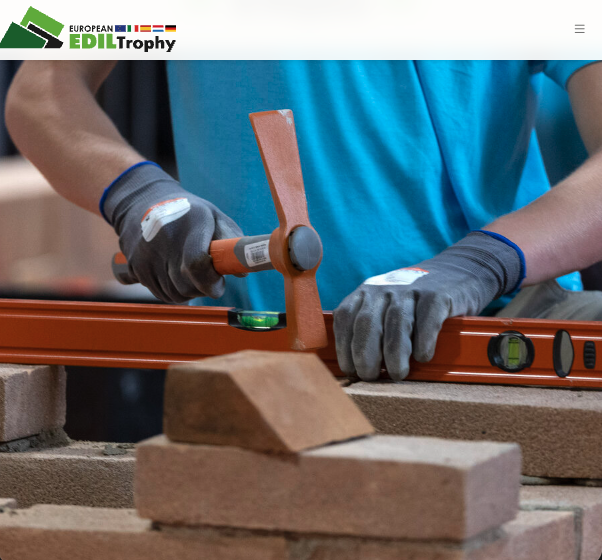
One of the most innovative pillars of the proposal is the implementation of the Gaming Ediltrophy model, a methodology based on experiential and interactive learning that articulates two complementary competitions. On the one hand, a design contest is held where technical personnel develop innovative projects using dry construction techniques; on the other, the best selected design is transferred to the construction contest for operators, who execute the work putting the acquired knowledge into practice. These tests are first developed at the national level to culminate in a grand European final to be held at the SAIE fair in Bologna in October 2026.
Transnational consortium and collaboration with the business fabric
The development of the project rests on a European consortium coordinated by the Italian entity FORMEDIL (Ente Nazionale per la Formazione e l’Addestramento Professionale nell’Edilizia). Alongside it, the Fundación Laboral de la Construcción of Spain, the Centre de Compétences Parachèvement of Luxembourg, the BFW Berufsförderungswerk der Bauindustrie NRW of Germany, and the Commissione Nazionale Paritetica per le Casse Edili (CNCE) of Italy participate as main partners.
The program includes a European competition with a final at the SAIE fair in Bologna in October 2026 for technicians and operators.
The technical and industrial viability of the developed methodologies is guaranteed through the active cooperation of key sector associations at the EU level, such as FIEC, EFBWW, EBC, and EE CEA PME. Likewise, the project adds the direct support of technology and specialized manufacturing firms such as Würth, Atedy, and Tecnobit, which provide knowledge on state-of-the-art materials and tools for the execution of dry works.
Social inclusion, workshops, and ways to participate in the project
Beyond the purely technical and digitalization components, European Ediltrophy places the social dimension at the center of its strategic objectives. The initiative is aimed at opening real opportunities for access to qualified employment within building for vulnerable groups or those with fewer opportunities, including migrants, refugees, and long-term unemployed people. To respond to this goal of social integration, the project structure integrates the specialized collaboration of entities such as CIR (Italian Refugee Council).
Organizations, companies, and professionals can join through the official portal europeanediltrophy.eu and local partner entities.
To favor the dissemination of knowledge, the project contemplates the realization of informative sessions, thematic seminars, practical workshops with experts, and networking spaces and exchange of good practices between companies and training centers. For those professionals, technicians, operators, and entities interested in participating in the upcoming training actions, workshops, or Gaming Ediltrophy competitions, access and registration are managed centrally through the official project portal www.europeanediltrophy.eu, as well as through the direct channels and registration platforms of the partner entities in each country, such as the Fundación Laboral de la Construcción in Spain.