
The Observatorio 2030 of the Spanish Council of Architects’ Associations (CSCAE) has presented «Primum Non Nocere», the first teaching unit linking architecture with health and territory. In 2025 the project received the highest score among 474 proposals in the Ministry of Housing and Urban Agenda’s grants call for the dissemination, promotion and research of architecture.
A tool born from the Ministry’s grants call
“Innovative, participatory, adaptable and replicable.” That is how the Observatorio 2030 of the Consejo Superior de los Colegios de Arquitectos de España (CSCAE) describes its new teaching unit, «Primum Non Nocere», which links architecture with health and territory without overlooking emotional memory.
The tool puts into practice the project with which the Observatorio obtained, in 2025, the highest score in the grants call run by the General Secretariat for Urban Agenda, Housing and Architecture of Spain’s Ministry of Housing and Urban Agenda for the dissemination, promotion and research of architecture, out of a total of 474 proposals. After ten months of work, it is now launched with the aim of helping to shape, from the classroom, an informed and trained citizenry able to claim the quality of the built environment as a right that determines overall wellbeing.
«Primum Non Nocere» achieved the highest score among 474 proposals in the Ministry of Housing and Urban Agenda’s grants call
“We live architecture”
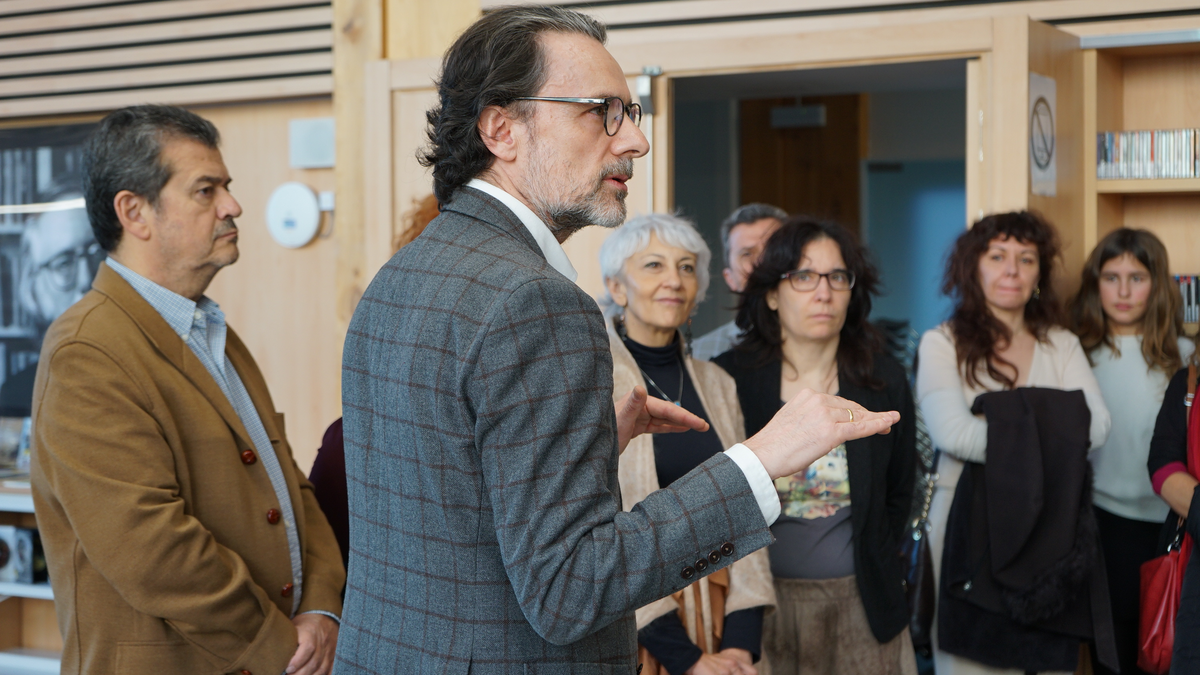
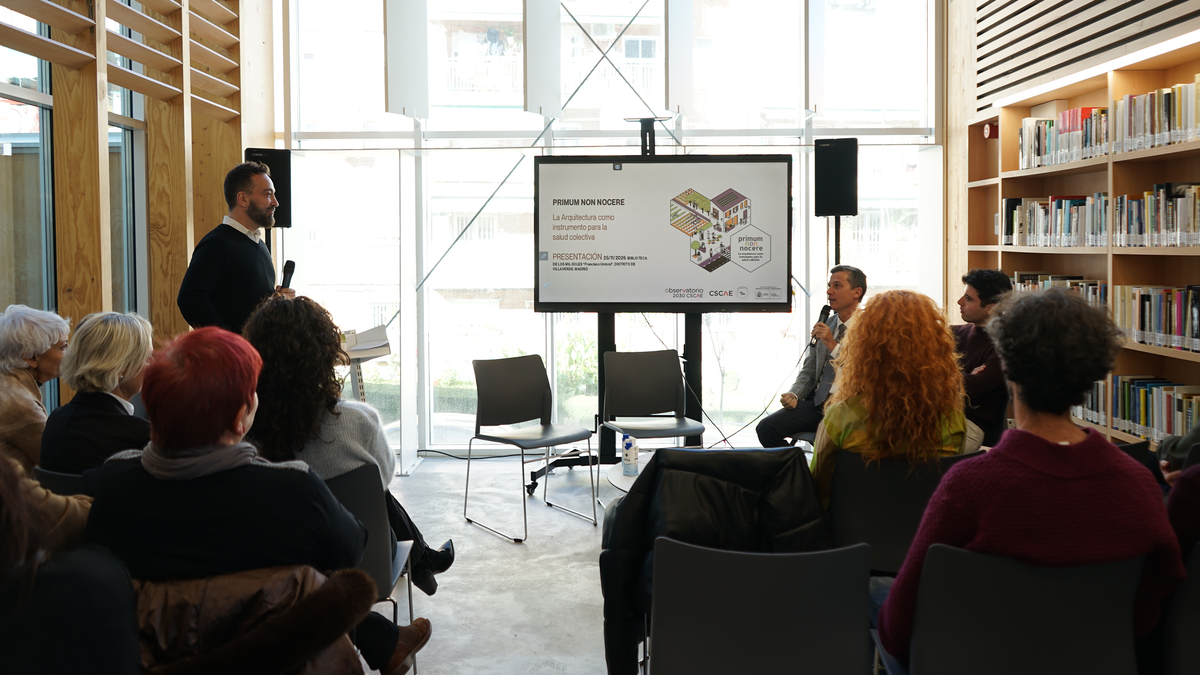
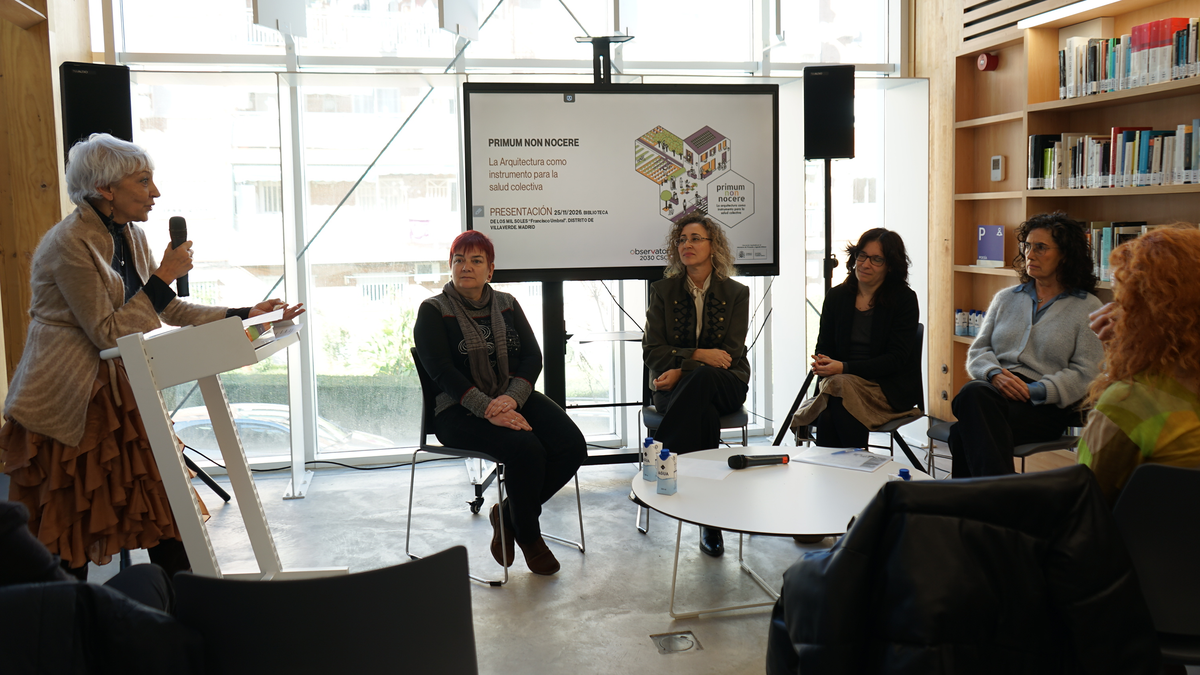
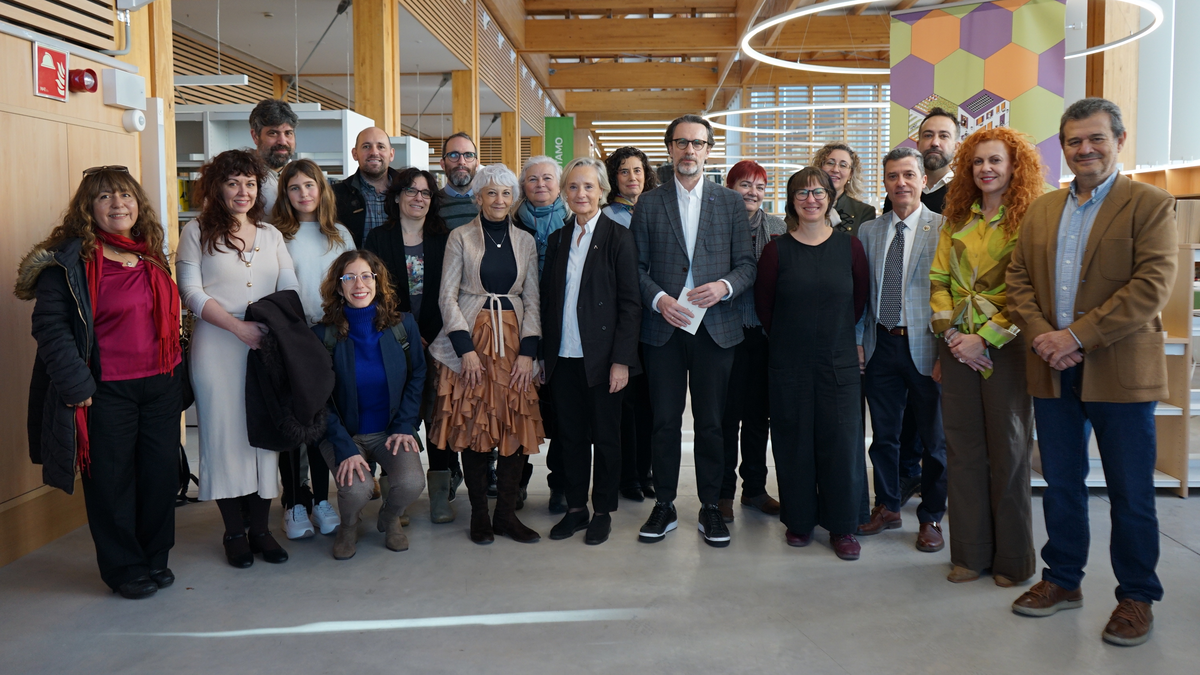
The presentation took place on 25 November at the Biblioteca de los Mil Soles (Francisco Umbral) in Madrid’s Villaverde district, winner of the Sustainability and Health Award at the ARQUITECTURA 2025 Awards. The building is itself part of the teaching unit because of its quality, and its author, architect Miguel Ángel Díaz Camacho, guided attendees on a visit before the event. Representatives of the Ministries of Housing and Urban Agenda and of Health attended, together with the project’s core team and some of the experts and students who took part.
Marta Vall-llossera Ferran, presidenta del CSCAE, reflected: “We often associate health exclusively with healthcare. However, it has been shown that factors such as housing quality, access to adequate public spaces, the presence of green areas, sustainable mobility or universal accessibility have a direct influence on our quality of life. Buildings, cities and public spaces stir emotions in us and contribute to health and wellbeing. We live architecture.”
Faced with the “threat of standardisation driven by haste”, Vall-llossera stressed how crucial it is that “the importance of quality architecture is understood from school onwards”. Mari Ángel López Amado, directora del Observatorio 2030 del CSCAE, added: “The more we know about the aspects of our surroundings that affect our quality of life, the more solidly we will be able to demand that our institutions transform them.”
A Delphi panel and two pilot workshops
More than twenty experts from different fields contributed to the project through a Delphi panel, and its feasibility was tested in two pilot workshops: one with secondary school pupils at IES Zurbarán in Badajoz and another with residents of El Recuenco (Guadalajara).
The work was steered by a core group made up of the Observatorio 2030 team; Elisa Pozo Menéndez, an architect specialising in active ageing; Anneta Santacreu Felis, architect, illustrator and art mediator; and Pilar Morcillo Sánchez, social educator and teacher, who handled the educational adaptation.
A 94-piece board and four families
The unit consists of a set of adaptable, reusable resources for community activities, cultural centres, local authorities and outreach. It includes a student guide, the pupils’ direct working material for exploring the built environment from a collective health perspective; a teacher’s guide, with didactic, methodological and organisational guidance to run the sessions and support assessment; a tutorial video; an information leaflet; a learning diary; and a library of QR codes with examples of good architectural practice.
The whole activity revolves around a guiding question: “How does architecture influence the way we live, live together and feel?”
Its centrepiece is an illustrated board with 94 hexagonal pieces depicting a small town where human relationships intertwine. On it, illustrator Anneta Santacreu Felis has placed landmark contemporary buildings such as the Biblioteca de los Mil Soles itself, the Valverde Health Centre (Leganés), Barcelona’s superblocks («superilles») and the social housing designed by Peris+Toral in Ibiza.
A board of 94 hexagonal pieces and a deck of 48 cards guide pupils through the impact of architecture on health
With the help of a deck of 48 learning cards, pupils discover that impact through the stories of the four families at the heart of the project. The stories deal with mobility and street design (“Let’s go! Moving every day”); local shops (“Good, nice and cheap?”); identity, memory, heritage and territory (“This is the story of a sandwich of bread with oil and salt”); architecture and wellbeing (“I’m off to the library”); accessibility and autonomy in public space (“The sidewalk ballet”); nature, leisure and physical activity (“A breath of fresh air”); and healthy housing (“Much more than counting rooms”).
The activity is completed by two critical-thinking exercises: students reflect on how they live in their own homes and on what use they would give to a vacant plot to turn it into public space.
Digital, printable and audiovisual formats
The board has a digital version to project in class and a printable format, and the cards are available in printed and printable form. The set is rounded off with 11 audiovisual pieces and videopodcasts, spread across the two guides, offering institutional, technical and first-hand perspectives. The worksheets, the learning diary and the assessment tools make it possible to document the process and assess reasoning, participation and the ability to apply what has been learned to the local environment.
Pilar Morcillo Sánchez underlined that the material is designed for “learning by doing”, with individual, group or whole-class activities, so that it adapts to an increasingly diverse student body and fosters inclusion. It also adapts to teachers who, according to Morcillo, are as diverse as their students and, although “very well prepared to teach their subject, have no time”.
Rafael Domínguez González, director del IES Zurbarán, said: “If we want quality education, the cross-cutting nature of tools like this one will help us improve it, because this cross-cutting approach makes our pupils better, and they will be the citizens of the future.”
Health, administrations and neighbours
Also speaking at the event were Enrique Collada Sánchez, alcalde de El Recuenco, who described what the workshop meant for the town, and first-year secondary student Nora Erlich García. Some of the unit’s videopodcasts were also screened.
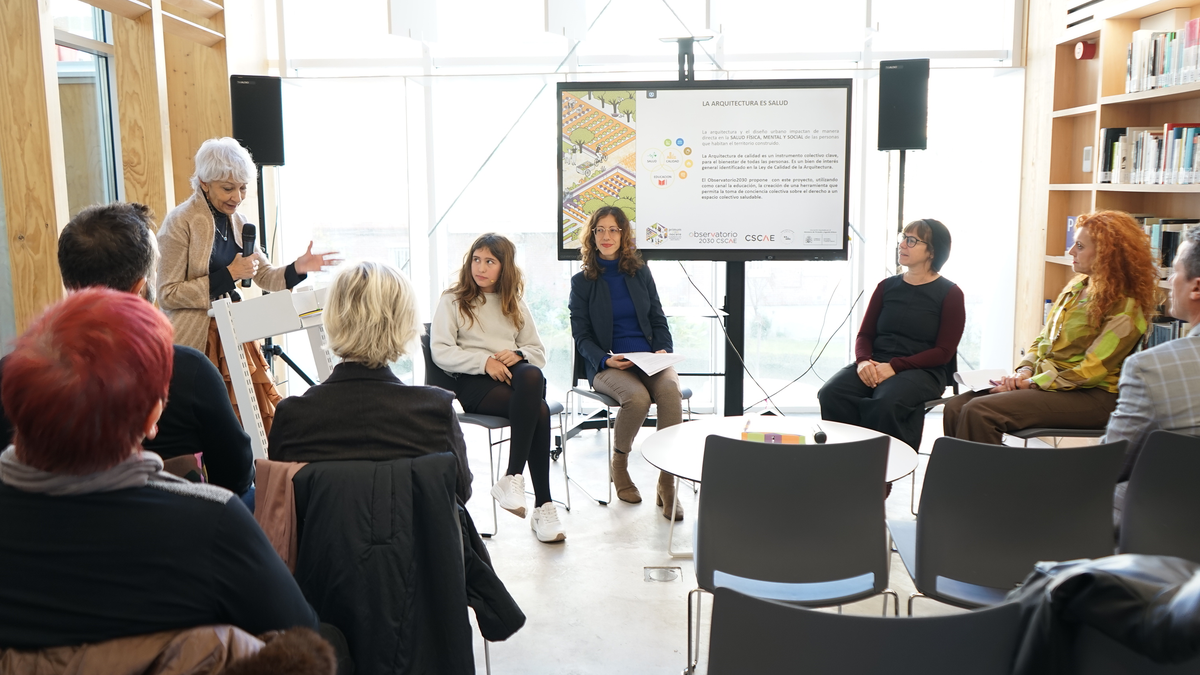
A round table brought together stakeholders from health and architecture: Carmen Moreno Balboa, consejera técnica de la Dirección General de Arquitectura y Agenda Urbana; Ana Gil Luciano, jefa del Área de Promoción de la Salud y Equidad de la Subdirección General de Promoción, Prevención y Equidad en Salud; Inmaculada Pérez Leiton, presidenta de la Asociación de Madres y Padres del IES Zurbarán; and Margarita García Álvarez, vicepresidenta de la Confederación Estatal de Asociaciones Vecinales (CEAV). All of them praised the “impressive” work and “the value of a project they hope will go a long way and be replicated”.
Goal: entering the education system
La Casa de la Arquitectura already has the teaching unit. The next step, according to the Observatorio 2030’s director, is to scale it up: to include it formally in the education system of every autonomous community and to promote it as a training tool through parents’ associations, the Spanish Federation of Municipalities and Provinces (FEMP), organisations such as CEAV and the Colegios de Arquitectos themselves.
All «Primum Non Nocere» materials, including the student guide, the teacher’s guide, the printable board and the learning cards, can be downloaded free of charge (in Spanish) from the CSCAE website. The recording of the presentation and the videopodcast playlist are available on YouTube.