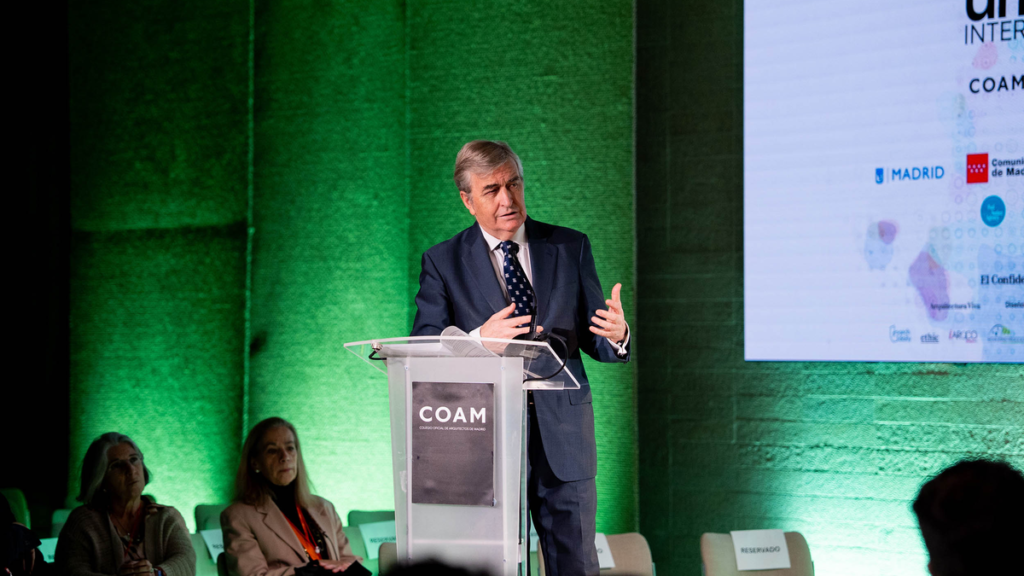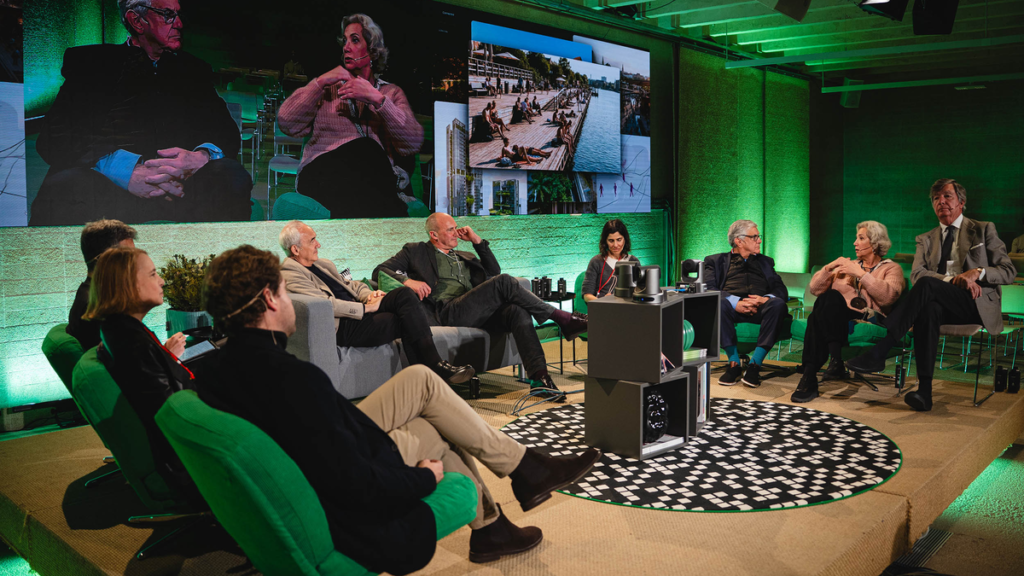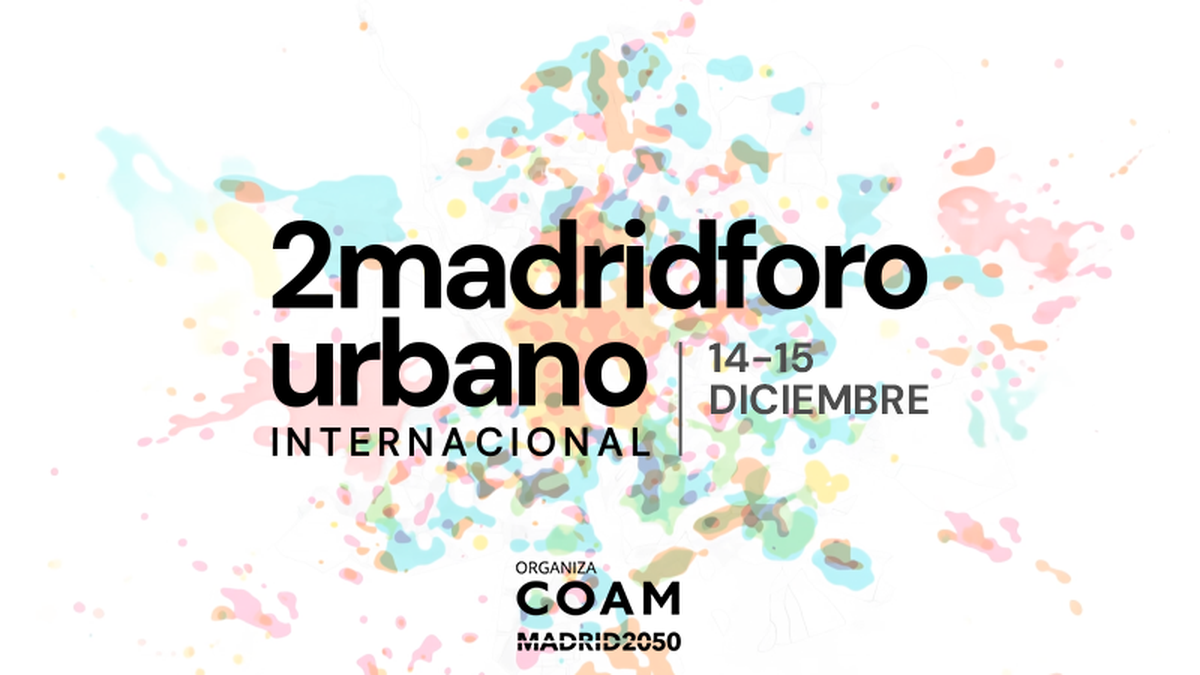

Having laid the foundations of its urban laboratory in 2025, the Madrid2050 platform is now moving towards practical application. The second edition of the Madrid Foro Urbano Internacional (Madrid International Urban Forum), to be held on 14 and 15 December at the headquarters of the Official Association of Architects of Madrid (COAM), aims to place Madrid at the centre of international knowledge on urban quality.
What will the cities of the future look like, and what can be done today to make them better places to live? According to the United Nations, two thirds of global population growth up to 2050 will take place in cities. The challenge, COAM points out, is not only to build more homes and infrastructure, but to ensure urban environments that are accessible, sustainable and able to offer a better quality of life. This will be one of the major challenges addressed by the second edition of the forum.
The first edition, in 2025, turned Madrid into a space for exchanging international knowledge and experience (in Spanish). This year, the forum wants to go one step further. Through the Madrid2050 urban quality lab, COAM seeks to connect architectural and technical knowledge with the experience of organisations that have driven major transformation projects in cities around the world. The goal is to develop a common methodology, new measurement tools and solutions that can be applied in Madrid, assess their results and generate lessons useful for other cities.
This ambition takes shape in three new initiatives to be presented at the event: MACA (Mapa de Calidad, Quality Map), a tool to analyse and measure urban quality in the Madrid region; the international study led by Greg Clark on the leadership and transformation models of eleven organisations in different cities; and five pilot projects in the region in which to begin applying and testing the methodology.
“The challenge is not only to imagine what the cities of the future will be like, but to have the knowledge and tools needed to make them better. Architecture plays an essential role in this process, because the quality of the spaces we build directly affects people’s lives. With Madrid2050 we are going beyond the exchange of experiences to turn that knowledge into solutions that we can test and apply in Madrid,” says Sigfrido Herráez, decano del Colegio Oficial de Arquitectos de Madrid.
MACA, a map to measure urban quality
One of the forum’s main features will be MACA (Quality Map), an analysis platform that, based on 30 territorial determinants organised into six dimensions, will make it possible to compare urban quality across different areas of the Madrid region and identify needs and opportunities for improvement. The tool, still under development, incorporates the knowledge of architects and other specialists to move towards planning based on data and quality criteria.
According to the programme published by COAM, the session Mapa de calidad: medir y anticipar el impacto de las decisiones (Quality map: measuring and anticipating the impact of decisions) will be held on the afternoon of 14 December, with the studio 300.000 km/s (Mar Santamaría and Pablo Martínez), Raffaele Sisto (Smart&City) and the Madrid2050 team.
MACA will make it possible to compare urban quality across the whole Madrid region using 30 territorial determinants organised into six dimensions.
Greg Clark and the civic leadership of eleven organisations
International global cities expert Greg Clark will present Who shapes the future of cities?, a research project that analyses eleven organisations in different cities around the world to understand how civic leadership, collaboration between institutions and long-term planning help transform urban environments and improve their quality. Clark will open the 14 December session with a keynote lecture and the presentation of the study.
Five pilot areas in the region
This knowledge exchange will be complemented by the presentation of five pilot areas in the Madrid region, linked to Getafe, Alcalá de Henares, Carabanchel and San Blas, where Madrid2050 wants to test its methodology and explore solutions related to housing, mobility, public space and urban regeneration. The forum programme details these areas: the Aviación and Estación neighbourhoods in Getafe; Roca City in Alcalá de Henares; Carabanchel; and the Atlético de Madrid Sports City in San Blas. They will be presented in two sessions on 15 December.
New York, Sydney, London and Stuttgart at COAM
The forum will bring to COAM leaders of some of the main international organisations working on the transformation of cities, with the aim of comparing strategies and exploring how to transfer these lessons to the challenges of the region. Participants include:
- Tom Wright, President and CEO of New York’s Regional Plan Association, a benchmark organisation in metropolitan planning, housing and mobility.
- Eamon Waterford, CEO of the Committee for Sydney, which works on the challenges of urban growth, housing and quality of life.
- Catherine Staniland, Chief Impact Officer at London’s NLA, focused on regeneration and improving the built environment.
- Andreas Hofer, director of IBA’27 Stuttgart, an international initiative promoting new models of housing, urban regeneration and sustainable construction through architectural competitions and pilot projects.
They will be joined by representatives from Barcelona, Bilbao, Málaga and Turin, who will share experiences in strategic planning, urban regeneration and public-private collaboration.
Leaders of organisations from New York, Sydney, London and Stuttgart will share at COAM how they have driven the transformation of their cities.
The value of architectural competitions
The programme will include a panel on the value of architecture and urban planning competitions, with Teresa Táboas, secretaria general of the International Union of Architects (UIA); Nathalie Brison, directora of Wallonie-Bruxelles Architectures (WBA), the public body promoting the architecture of Wallonia-Brussels internationally; and Jaime Eizaguirre, architect and partner at the Belgian studio A229.
Cities Connection Project exhibition and MFUI Awards
The forum will also host the international exhibition Cities Connection Project, curated by architects Xavier Bustos and Nicola Regusci, which will bring together 16 projects from the Madrid region, selected through an open call (Call for Projects) for COAM members (in Spanish), and 20 international initiatives, together with proposals from IBA Stuttgart and good practices from the guest cities. The exhibition will showcase and compare architectural solutions linked to housing, mobility, public space and urban regeneration.
In addition, attendees will be able to take part in choosing the first Madrid International Urban Forum Awards, sponsored by Danosa, by voting for the selected Madrid projects. The awards will recognise the most-voted proposals in each of the four categories.
Forum attendees will vote on the 16 Madrid projects on display to grant the first MFUI Awards in four categories.
“The real value of this forum lies in bringing together those who have the knowledge and the capacity to drive the transformation of our cities. We want Madrid to be a meeting point between international experience and local challenges, where architects, administrations, companies and professionals can share solutions and create new opportunities for collaboration. Our ambition is for the work that begins here to continue throughout the year and help improve people’s quality of life,” says Ángela Baldellou, directora gerente del COAM.
Institutional and business support
The Madrid International Urban Forum 2026 is an initiative of Madrid2050, led by COAM in collaboration with Forética and ASPRIMA. It has the institutional support of Madrid City Council and the Community of Madrid, and is sponsored by Holcim, Roca, Metrovacesa, Atlético de Madrid, Crea Madrid Nuevo Norte, Danosa and ASEMAS. C40 Cities, the global network of cities committed to climate action, is also a partner, and universities, professional associations, foundations, media and urban developers are taking part.
Madrid2050, a permanent urban laboratory
Madrid2050 is a permanent platform that brings together the main urban developments and representatives of public administration, the private sector, academia and the third sector, with the aim of promoting and monitoring the urban transformation of the Madrid region in an exemplary, scalable and replicable way. More than 75 organisations and experts take part in the project, structured around four working groups: Liveability and Housing, Mobility and Infrastructure, Public Space and Facilities, and Regeneration and Refurbishment.
The platform is led by COAM, ASPRIMA and Forética, together with the Spanish Ministry of Housing and Urban Agenda, the Community of Madrid and Madrid City Council. As well as a space for analysis and debate, it offers online viewers with data on building permits (visado), the progress of urban developments and energy refurbishment grants, to promote transparent, evidence-based urban management.
Practical information
- Dates: 14 and 15 December 2026.
- Venue: Colegio Oficial de Arquitectos de Madrid (COAM). Calle Hortaleza, 63. Madrid.
- Programme and registration: madrid2050.coam.org/madrid-foro-urbano-internacional-2026