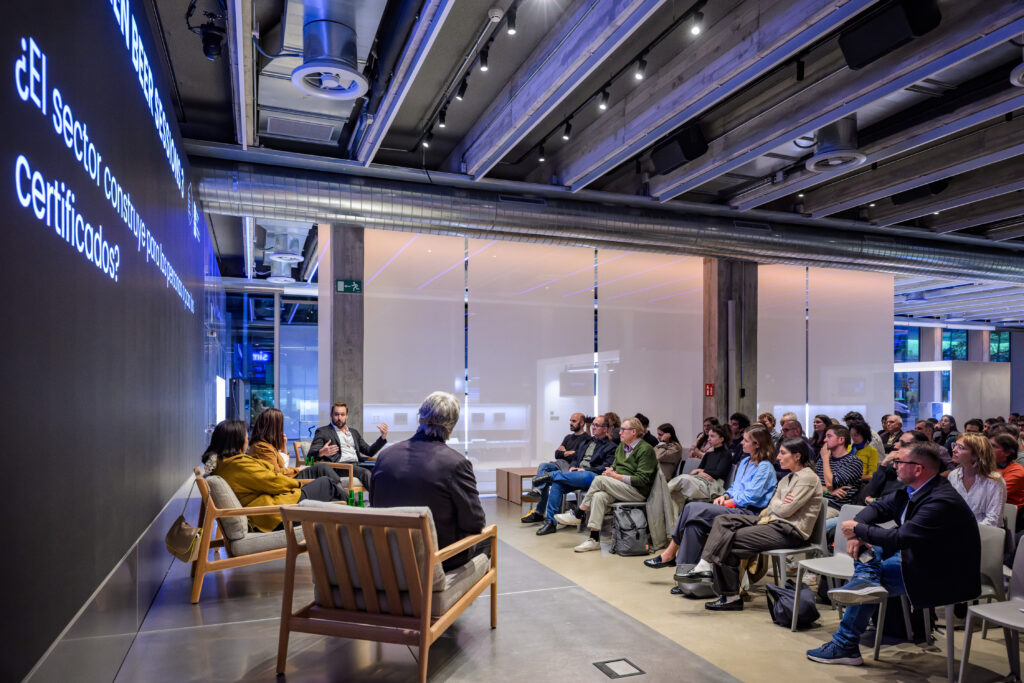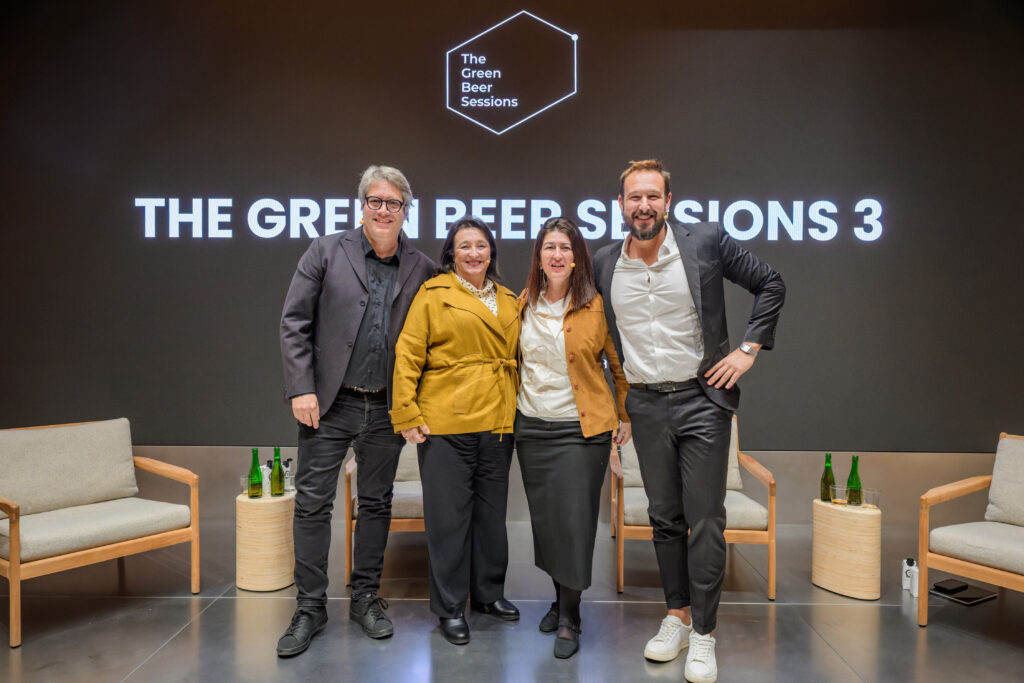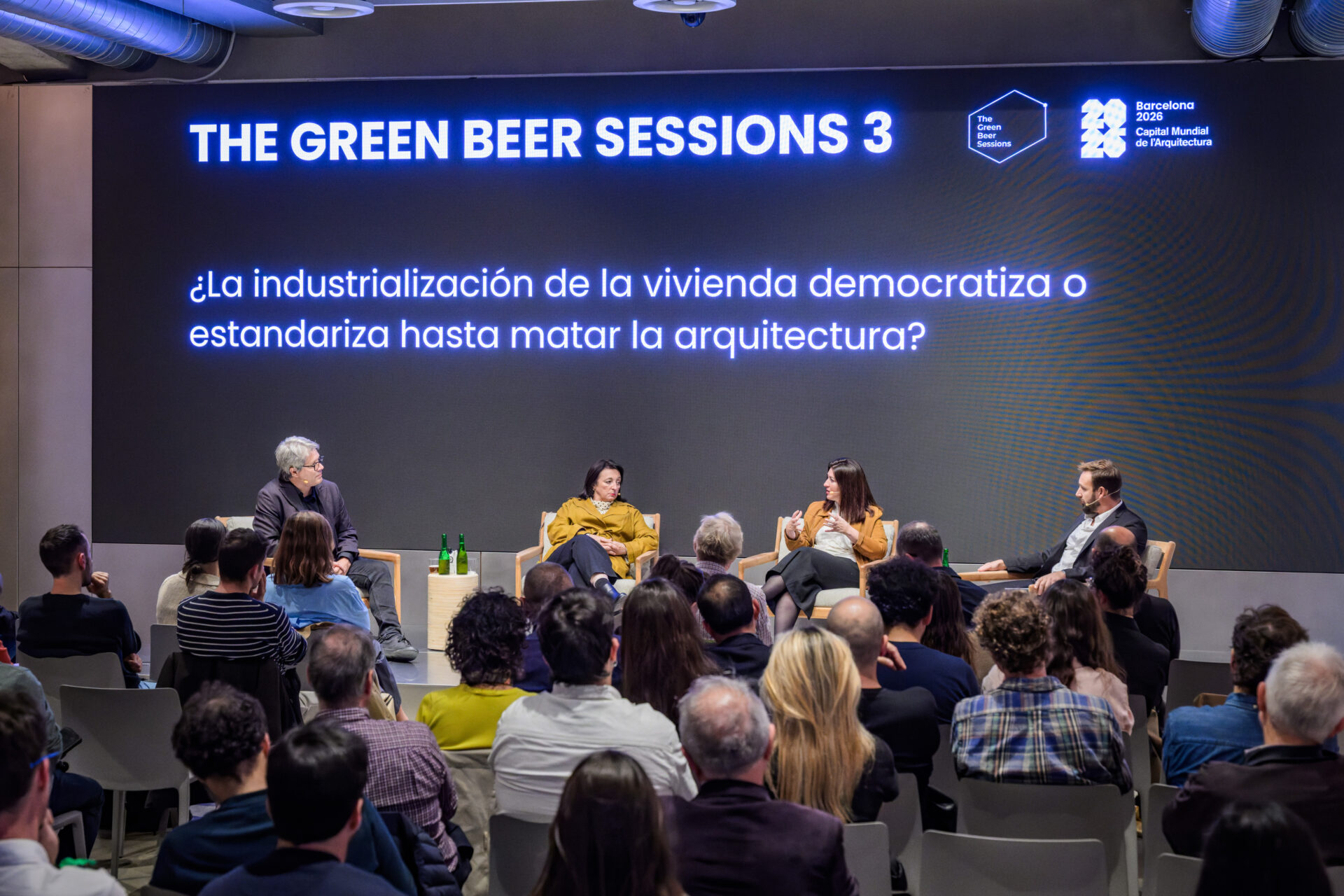


The third edition of The Green Beer Sessions brought the CEO of Holding Componentes and the dean of the COAC together on 20 October at Simon La Casa de la Llum to answer a direct question: are we ready to industrialise construction? The unscripted conversation moved from productivity to housing, factory financing, public procurement and the role of the architect.
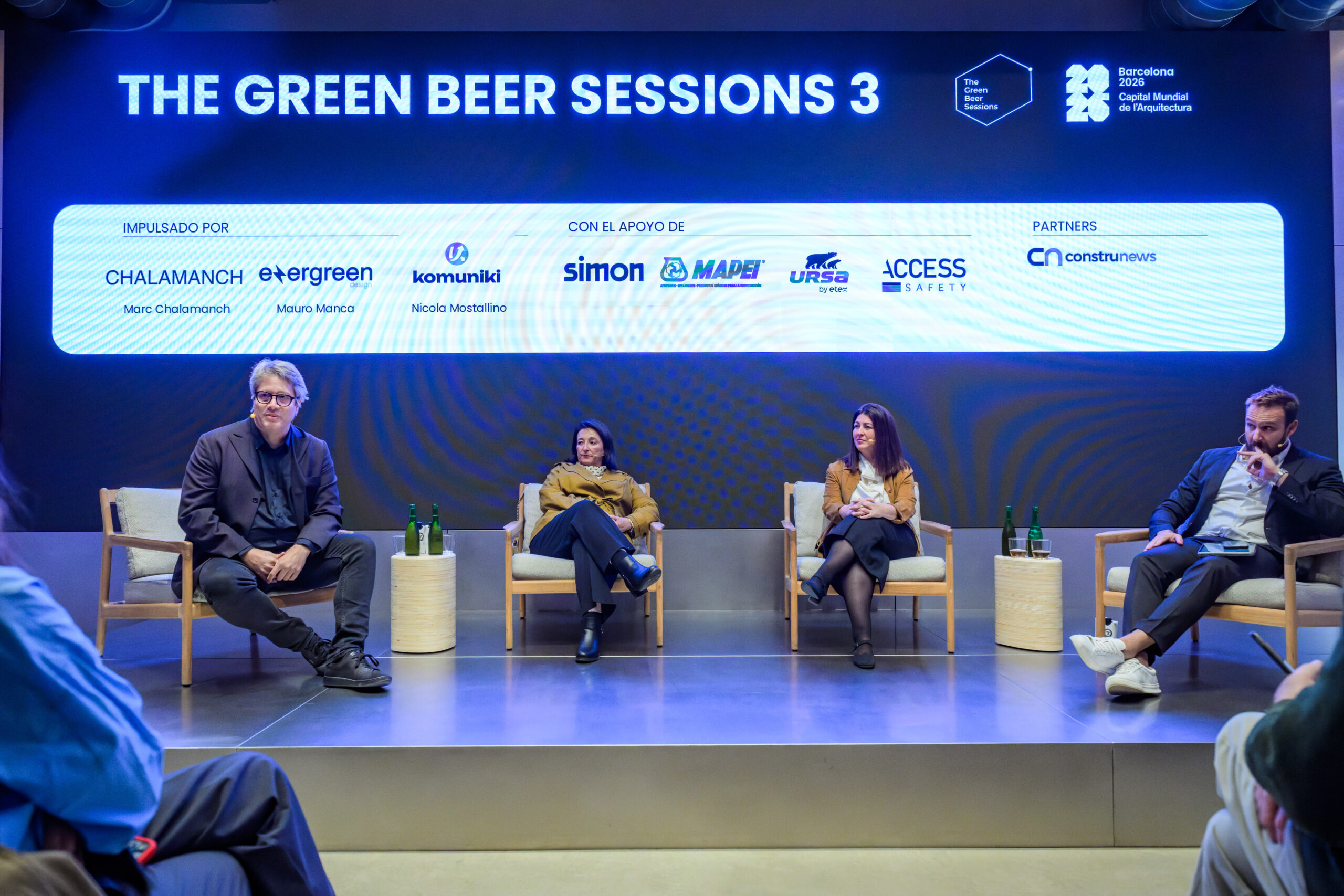
Industrialisation is no longer debated in terms of whether it will arrive, but of who is paying for it. That idea ran through the third edition of The Green Beer Sessions, held on 20 October at Simon La Casa de la Llum in Barcelona as part of the programme of Barcelona World Capital of Architecture 2026. After a first session on the rules of the city and a second one focused on circularity, the format promoted by Archikubik, Energreen Design and Komuniki closed its 2026 cycle with a debate of more than an hour and a half under the title “Are we ready to industrialise construction?”.
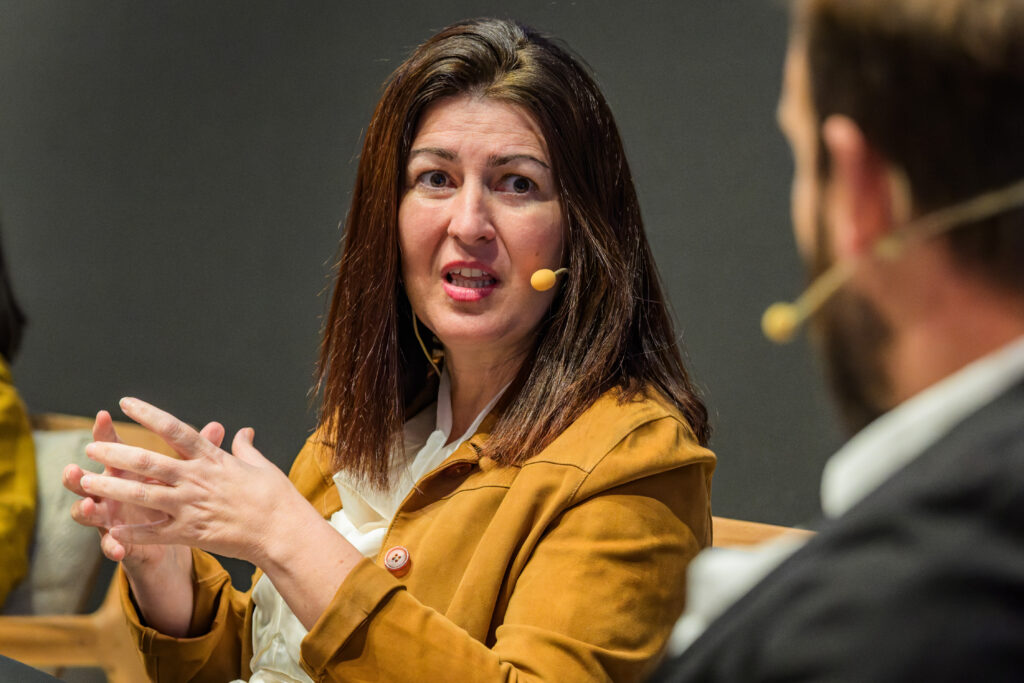
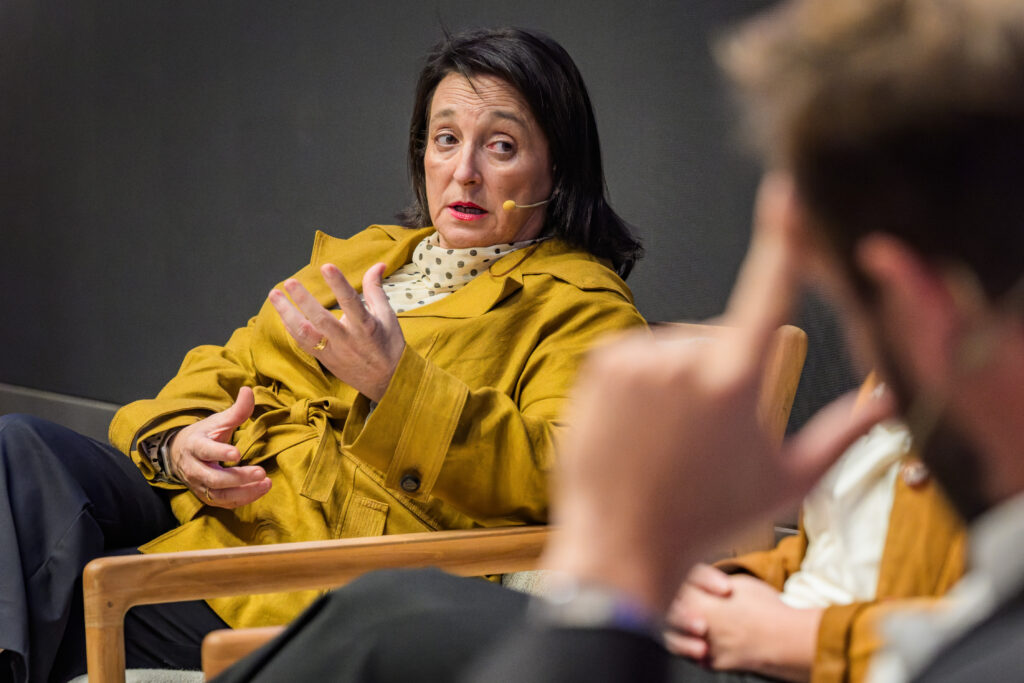
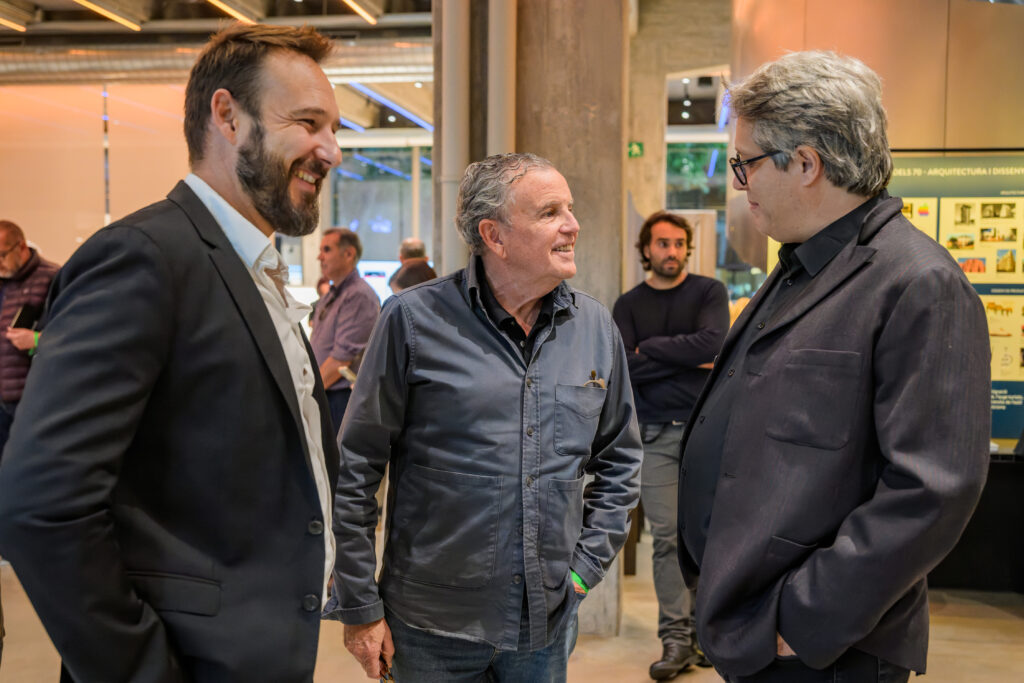
At the table were Mª Begoña López Ferrer, CEO de Holding Componentes (Componentes y Unidades Constructivas), and Sandra Bestraten, decana del Col·legi d’Arquitectes de Catalunya (COAC), together with Mauro Manca (Energreen Design) and Marc Chalamanch (Archikubik), who led the conversation. As in previous editions, the meeting was held with no filters and no script, with the floor open to the audience in the final part.
A sector still designing as if it were the 1990s
Manca opened the debate with a critical reflection on the profession itself: the architecture and construction sector is still working “as if we were still in an age of abundant resources and energy”, something that, in his view, shows in the way projects are designed, competitions are called and professionals are hired. Sustainability, he argued, is not one more service or one more specialist added to the team, but a “radical, conceptual and cultural” change that architecture risks failing to lead.
Bestraten replied that professionals are ready, but lack a framework. Regulations, “with very good intentions”, have together created “a very limiting scenario, not to say a paralysing one”, which prevents innovation at the scale required by the housing challenge. She called for spaces for experimentation, “bubbles” in which architects and industry can test new ways of working and new typologies, and argued that sustainability cannot be perceived as an extra cost: “Our homes have to be our climate refuge”.
In that context she presented the newly launched Fundación COAC, conceived as a “hinge” space with society to take “brave decisions” in the face of the politicisation of housing, and recalled current lead times: between 4 and 5 years to deliver housing and between 8 and 12 years to generate developable land. “We have an enormous housing deficit, and this requires agility and a change of scale,” she said.
Bestraten noted that it currently takes 4 to 5 years to deliver housing and 8 to 12 years to generate developable land
Productivity, efficiency and a state policy
López Ferrer proposed a change of focus: rather than industrialisation, she prefers to talk about productivity and efficiency. With a housing problem and a labour problem on the table, the sector is living, in her view, “a historic moment”, and needs what other countries in Europe, Asia and the United States have already done: a state policy for construction and its industry. “Today a PERTE, tomorrow some royal decrees,” she said ironically of isolated measures, while manufacturers invest time and money without the regulatory and financial framework on their side.
The CEO also stressed the effort architecture practices make to industrialise projects with a price and a deadline set “from moment zero”, an effort that is not paid for, because fees still reflect the way projects were designed in the 1990s. She argued for bringing sustainability specialists and the quantity surveyor (aparejador) on board from the start: “Unless I design a product from the beginning knowing the what, the how and the how much, it is impossible.” Asked whether the sector is ready, she was blunt: “As of today, no, but we are taking important steps.” Bestraten, by contrast, answered “absolutely yes” regarding architects’ willingness, describing them as “the professionals with the greatest ability to reinvent themselves”, and pointed to over-regulation and bureaucracy as the causes of the loss of value of the architect’s work. The COAC, she explained, is working with artificial intelligence and technology to free up that time.
Industrialising is not prefabricating
One of the points of agreement was that prefabrication and industrialisation are not the same thing. López Ferrer explained that her group, focused on process and product engineering, ended up creating its own architecture practice because it was “impossible” to find truly industrialised projects: “Industrialisation goes far beyond installing prefabricated elements or compatible components. It is about costs, productivity and planning.” On the projects they develop in joint ventures with other practices, she admitted, “we sweat three times as much”.
The CEO recalled that this year she published, with other authors, the book “Los costes de la no industrialización” (The costs of non-industrialisation), and shared one of its conclusions: more than 10% of a building’s CAPEX is lost to execution inefficiencies, such as rework, poor planning or badly controlled logistics. “Most of the time these are management and execution problems,” she said, before dismantling the idea that industrialising makes things more expensive: “We are not going to be the only sector that industrialises to become more expensive.”
More than 10% of a building’s CAPEX is lost to execution inefficiencies, according to the book Los costes de la no industrialización
Bestraten shared her own experience: in 2008 she designed the Waldorf school in Bellaterra, which had to be built in three months for a teachers’ cooperative with limited resources. The result was, as she explained, the first public facility built in cross-laminated timber (CLT), with the entire project prefabricated and the bathroom delivered as a three-dimensional unit. Assembly, planned for three days, took four because of a hauliers’ strike. The key to making it cost the same as a conventional solution was designing with the construction system from the outset: “Perhaps it is not a question of money, but of methodology.” The school, she added, was dismantled and reassembled in 2018, putting its capacity for extension to the test.
Competitions, contracts and the value chain at the same table
For the dean of the COAC, the main challenge is to protect joint work between architects, engineering firms and industry in competitions, because today a competition is won and then, in the later contractor tender, the project “is rethought, redone and loses its essence”. She explained that Professor Ignacio Paricio, a trustee of the Fundación COAC, is helping to find the legal formula to protect those aspects, and called for “creative lawyers” to counter bureaucracy. “Time is money: industrialising is time, and we have to factor in the cost of time.”
López Ferrer, who has built 72 schools, secondary schools and nurseries in Catalonia and worked on design-and-build contracts for the former GISA, argued that the Spanish Public Sector Contracts Act already allows this kind of tender in cases such as housing or social facilities: an industrialised project, at a fixed cost and with the whole team behind a common goal. On the future of architecture practices, she considered that size is not what matters, but the ability to work as an ecosystem and as a value chain, because “there is no industry right now that can give you 100% of the building, except 3D modular”.
The CEO illustrated the sector’s progress with a figure: in 2021, when they helped set up Porcelanosa’s bathroom factory, Spain had one manufacturer of 3D modular bathrooms; today there are 18. She also explained that the structure is “the chassis” that organises the other components and makes them compatible, and that the first decision in an industrialised project is industrial coordination: stair and lift cores, bays and structural platform. Bestraten, for her part, said she was “convinced” that architectural quality is compatible with industrialisation, provided there is freedom to combine components and solutions.
Renovation, timber and factories that finance the works
The debate extended to renovation. Bestraten noted that, according to the Gremi de Constructors, industrialisation currently accounts for 2% of the construction sector in Catalonia, and warned of the lack of generational renewal and qualified staff on site. López Ferrer explained that in renovation they work with bespoke products, second skins with high-performance solutions and large-format dry linings, and cited the conversion of the former IBM building in Madrid, which yielded 500 homes, with structural reinforcement in steel and composite slabs.
On timber, the CEO said her group is developing a scheme of almost 500 single-family homes in 3D modular timber in Andalusia, although she warned that CLT “is expensive” and should be used only where it is really needed. Bestraten regretted that Catalonia has abandoned forests that burn every summer and called for industry to be generated in the territory to supply materials locally.
Financing was one of the most forceful topics. López Ferrer explained that each of her factories costs 40 million euros and that, although housing demand is guaranteed, production for the next 15 years is not. She criticised the fact that manufacturers may have up to 80% of a building produced for four or five months without being paid “until it reaches the site”, and explained the contractual formula she applies: certifying in the factory, transferring ownership of each element to the developer from the first screw, and acting as “holder and custodian”, with insurance covering 100% of the asset.
Each 3D modular factory is a 40-million-euro investment with no guaranteed production over 15 years
Women, factories and productivity
On gender, Bestraten argued that industrialisation can open the door to more women in construction, but warned of the barriers that persist on site, from trade culture to site huts without toilets for women. López Ferrer agreed that the factory makes integration easier: there people are specialised in tasks, not trades, as in the automotive and aeronautics industries, which in her view multiplies productivity by four or five, with continuous working days, eight-hour shifts and better conditions for work-life balance and for people with disabilities.
Questions from the floor: housing, the state and aesthetics
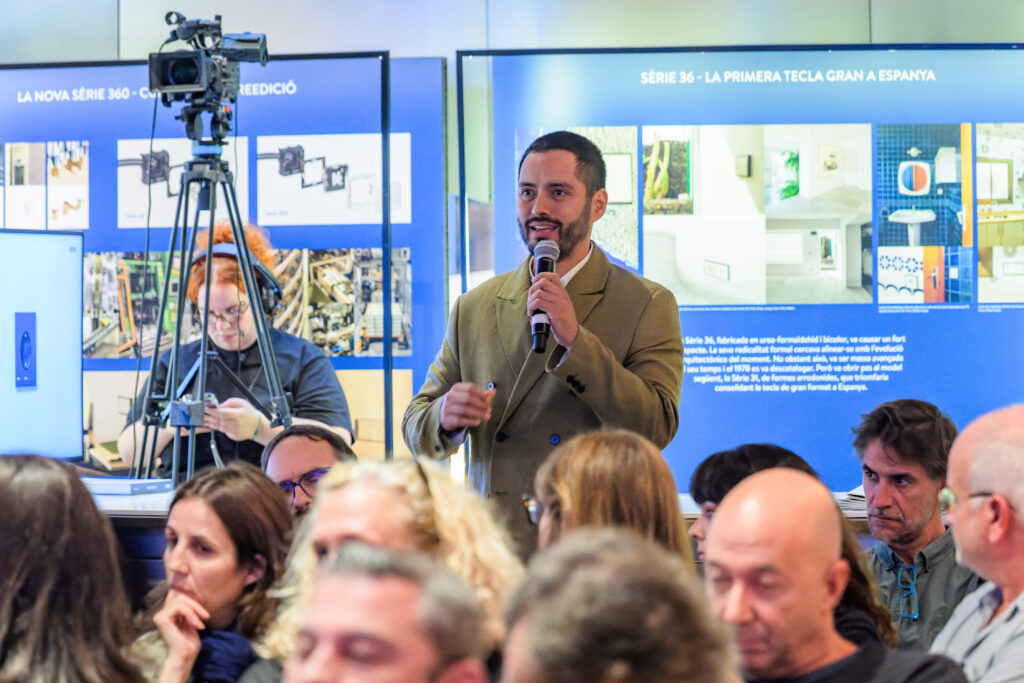
During the Q&A, López Ferrer put a figure on the scale threshold: in housing, from 20 single-family units or 50 multi-family units there is “more than enough scalability”. She also said that the entry test for her factory operatives consists of assembling and dismantling an IKEA piece of furniture, and that a hotel built in four or five months near Zaragoza for the Expo was dismantled after the Expo and reassembled in Mozambique.
An attendee from AENOR recalled the deficit of around 750,000 homes cited in Spain and asked about the political role of the architect. Bestraten reiterated her call for a national pact on housing: “Just as doctors were trusted during the pandemic, we are asking for trust in architects and the whole construction sector.” She noted that Catalonia invests 0.4% of its GDP in housing, compared with the 6% and 7% it allocates to health and education. López Ferrer cited the Netherlands, which industrialises 60%, and the United Kingdom, France, Japan, Singapore and Australia as examples of state policies.
Jorge Cuevas, secretario del Clúster de la Construcción Industrializada de Cataluña, asked whether industry can survive without public demand. “Extremely difficult,” replied López Ferrer: “Capital is waiting for that security.” The CEO also criticised the payment terms of large contractors, “they pay at 120 and 210 days when they get paid at 60”, and called for the law to be applied, along with transparency and collaboration. Bestraten added that time and risk make housing more expensive, criticised “defensive bureaucracy” and announced that the COAC will collaborate in the planning review included in a bill.
The last question, on the aesthetics of social housing, divided the table: while López Ferrer argued that it has nothing to do with industrialisation, Bestraten maintained that every era has its own aesthetic and that “very good architecture is being made”. The closing words went to Nicola Mostallino (Komuniki), who, from a non-technical perspective, placed both the problem and the solution in people and professionals.
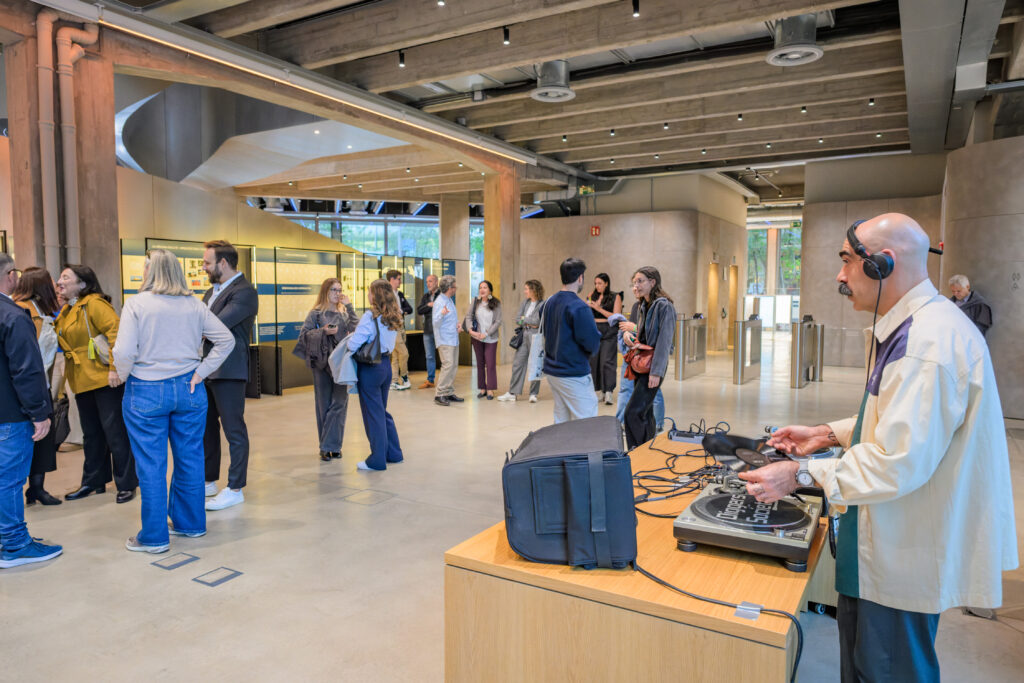
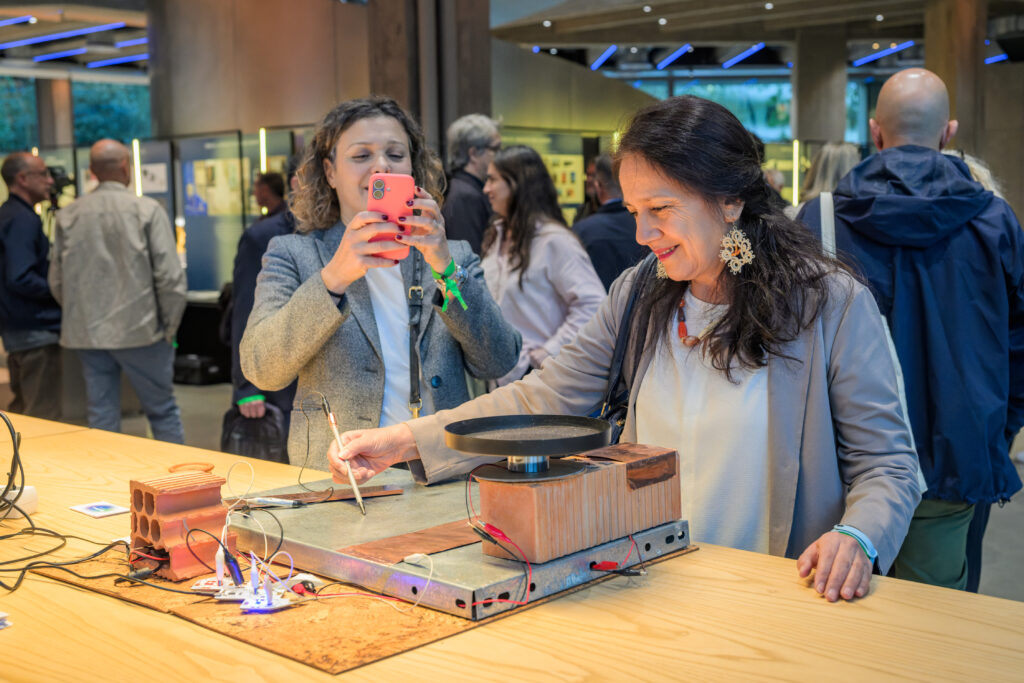
The session was supported by Simon, Mapei Spain, URSA by Etex and Access Safety Group, with Construnews as media partner. The evening included the sound installation “Trazo Sonoro” by Mercedes Nogueira, zero-kilometre fruit and vegetables from Brots Ecosocial and vinyl music by Paolo Meloni. The organisers hope to continue the cycle in 2027 as an independent format of its own.