

Competitions decided on price and deadlines, architects who win a project but do not direct the works, and engineering that has gone from around 15% of the project to about 50%. Speaking as “peripheral” architects, Rogelio Ruiz Fernández and Macario Luis González Astorga compare what the profession was like “in the beginning” with what it is today.
This text is part of a series of publications curated by Octavi Mestre under the title Other Architectures for Construnews, marking the launch of the publication’s English edition. It is signed by Rogelio Ruiz Fernández, a doctor architect from Asturias who runs the magazine con-arquitectura, and architect Macario Luis González Astorga, his partner in practice.
Peripheral, and proud of it
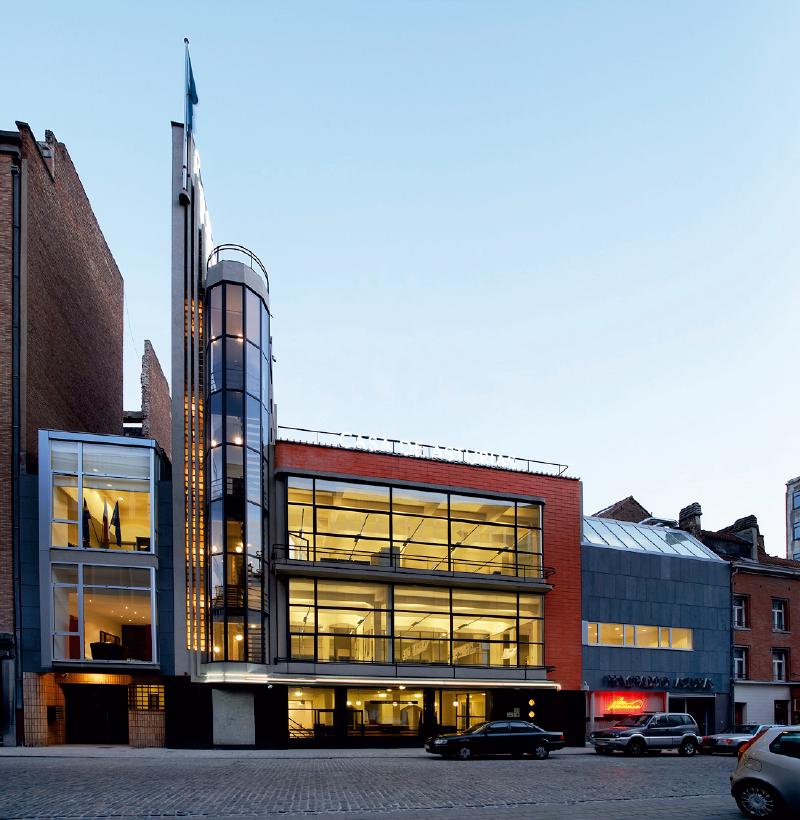
Master Mestre asked us for an article focused on our practice as architects. It is not said, but Octavio has a big reason for asking us for these lines: we have been working in this profession for thirty-six years and we have been lucky enough to be involved in difficult situations, winning and losing competitions, working mainly here in our homeland (Asturias), but sometimes even abroad, in places like Brussels, where we could see in advance what was going to come here later.
So there is another reason for being called: we are definitely peripheral… This is good in many ways, because in a small area like ours, we work with the same professionals again and again; we know who can give us more of their talent, who is most skilful for our needs… But on the other hand, we now have to present projects that cannot be done the way we used to, or the way we wanted to…
The trades: “Als ich Kan”
In the beginning, there were very good construction companies in our field, but there were also very good workers (carpenters, metalworkers, stonemasons, zinc workers…) who wanted to be perfect in their work. Each of them was somehow like Van Eyck when he wrote, under his “Man in a Red Turban”, Als ich Kan (as best I can). So on several occasions we were the ones learning from them, and they were the ones offering us their precious know-how. Back then, it went without saying that we were rowing in the same boat.
But not everything was so good. For example, people used to drink a lot, and you could find (even in big national companies) workers fighting the cold mornings with alcohol. Or people unbuckled from their harnesses. This is not possible today, because all workers and technical staff are very concerned about “safety first”, and that is a very good thing!
From conductors of the orchestra to citizen consultation
In the beginning we were the boss! Everybody had great respect for the presence of the architect. We used to say we were the conductors of the orchestra. Now we do not need to be treated as kings.
In the beginning, everybody assumed you would try to do your best for the city, for people, for everybody… But it was somehow like the French kings: “Tout pour le peuple, rien par le peuple”. Now you have to deal with a “citizen consultation” that troubles your “Renaissance conception”. Now you deal with the power of the people, against the “Independent Republic of their home”; you have to deal, somehow, with the “do it yourself” mainstream…
Builders who charge for quoting
In the beginning, our clients (public or private) asked for three or four quotes to choose who was going to build the project. We helped the developers to get the best one. Today, some of them charge you for the work of providing a price. (Let me explain: you, the architect, are giving them work, and they want to charge your client just for studying your drawings.)
Builders will tell you they have a lot of work and they do not need your project, so the king that the architect used to be has become a beggar asking for a favour. This new situation no longer lets you keep order on site as you did before, because you are “trembling” at the thought that the workers might leave. So the boss you used to be has somehow turned into someone who has to deal with other forces on site that may try to break what you want for your work, for your project.
The king that the architect used to be has become a beggar asking for a favour
Competitions sold by weight: price and time
In the beginning, competitions were mainly about architecture: you made your proposal and the jury decided on its values (its architectural values). Then, when you knew you were the winner and went to the Town Hall to thank them and introduce yourself, you felt people flattering your work and saying, with a smile: “We will do everything possible to build your project just as you dreamed it”.
But later came the competitions where what really mattered was the price you offered for your work, or the time it would take you to complete the project (before that, we were like nobles: we never talked about money). So what mattered was not the architecture but the price and the time. The winner was the one who sold architecture most cheaply. It became like the process of buying potatoes for a high school dining room… That is how low architecture had fallen!
The winner was the one who sold architecture most cheaply. It became like buying potatoes for a high school dining room
Winning the competition, losing the site
But things could always get even worse. In the beginning, once you had won the competition (you know, after working for two or three months, almost without sleeping, to take part), you would develop the whole project and then, as it should always be, you would be the director of the works on site. But now the process leads you not to be the director, so after all that huge effort, you have to pray to be replaced by a good architect… Someone who can read the project as you proposed it. It is like Solomon’s judgment over the baby (in the Book of Kings): you just want to be lucky enough to see the works growing, and look out of the corner of your eye like a spy on your own “baby”.
Engineering, from 15% to 50%
But in this replacement of the original architect on site, engineering firms carry great weight in winning these jobs that were originally directed by architects. And this leads us to another point that was different in the beginning. Back then, the money spent on engineers was about 15% of the project, but the laws changed so much, bringing new requirements, new laws from Europe, new air renewal systems, windows that must be watertight yet let air through at the same time… that today engineering averages about 50% of your work…
The laws changed so much, bringing new requirements and new laws from Europe, that today engineering averages about 50% of the project
Besides this, we can add the responsibilities that we architects bear, which do not decrease (unlike prices, quality, wages, etc.) but remain just as demanding as in the beginning.