

The Real Estate Asset Management Congress (CREAM) organised by IFMA España brought together 70 real estate and Facility Management professionals on 5 November in the auditorium of the Reale Seguros building in Madrid. Four panels examined how new ways of working, demand for computing, sustainability and building conversions are changing the way buildings are valued and managed.
In its fourth edition, the event addressed the impact of hybrid work on offices, the requirements for setting up data centres, the inclusion of sustainability criteria in valuations and the feasibility of converting buildings to a new use. The common thread was the link between financial decisions on assets and their day-to-day management, an area where Real Estate and Facility Management increasingly work hand in hand.
Hybrid work: attendance and office use measure different things
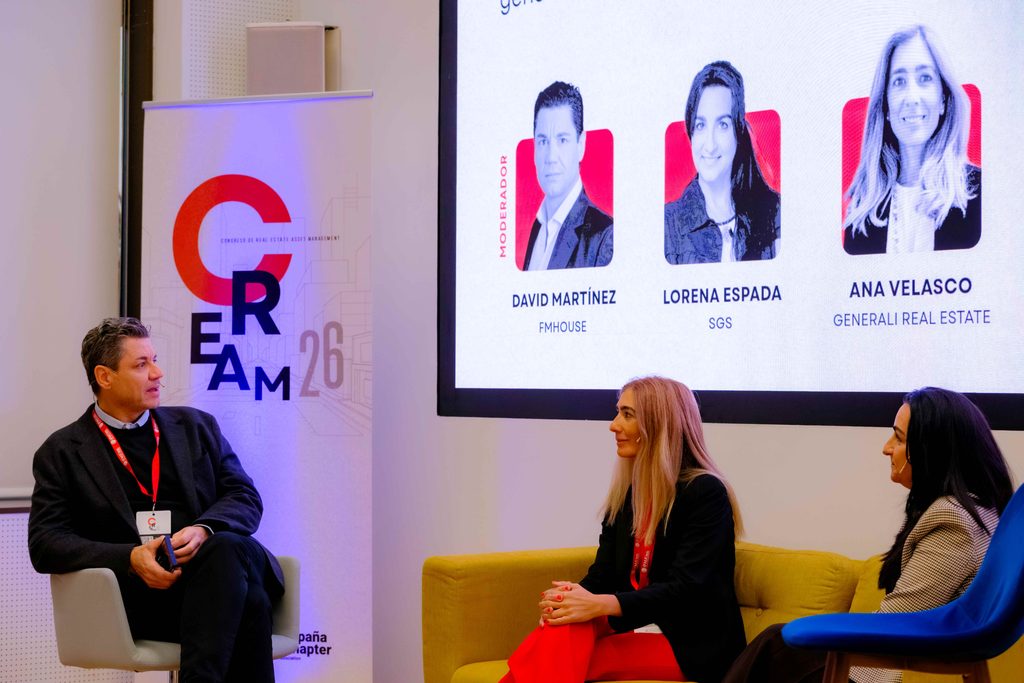
In the first panel, moderated by David Martínez (FMHOUSE), Lorena Espada (SGS) and Ana Velasco (Generali Real Estate) discussed what people look for when they go to the office and what companies should offer them.
The speakers noted that since the pandemic demand for social spaces where colleagues can meet has grown, beyond meeting rooms. Companies are leasing the same square metres, but making better use of the space, which is why a distinction must be drawn between attendance and use.
The debate placed office design among the decisions shared by Facility Management, Technology, Business and Human Resources, with input from clients and suppliers. It also asked how far Facility Management should reach when part of the working day is spent at home. To attract younger professionals, the panel pointed to two conditions: offering them an office worth going to and giving them flexibility.
Companies lease the same square metres but make better use of the space: attendance and use are not the same thing
Data centres: from available power to a national strategy
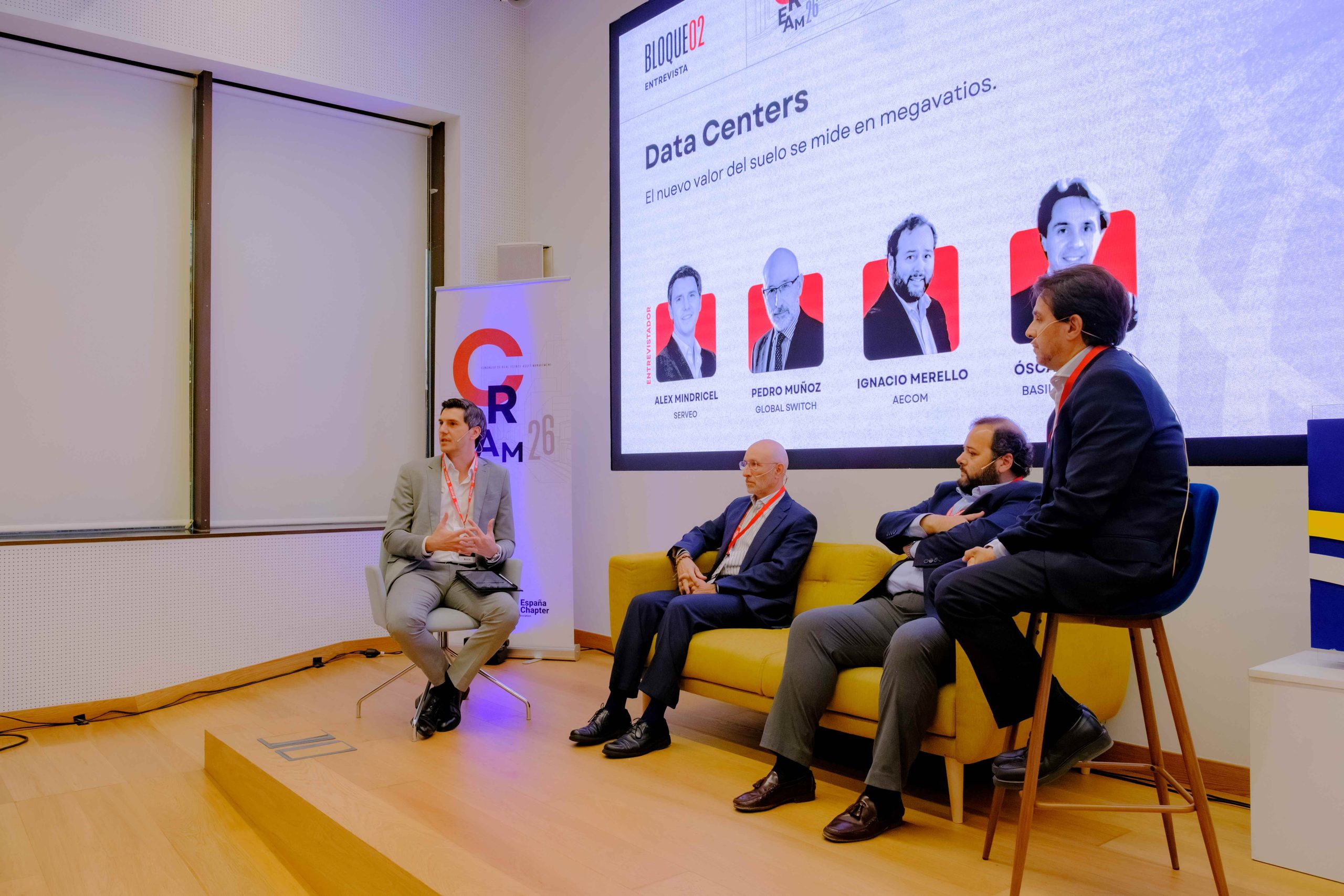
Pedro Muñoz (Global Switch), Ignacio Merello (AECOM) and Óscar Lobera (Basilio Paraíso), interviewed by Álex Mindricel (Serveo), discussed how the data centre has moved from the “broom cupboard” to critical infrastructure.
Available electrical power determines site selection. Proximity and latency still matter, although the session considered them manageable factors that make it possible to look for larger, more affordable plots outside the main economic hubs.
Aragón was cited as an example for its combination of renewable energy, competitively priced land and a supply chain able to deliver the projects. The participants highlighted public-private collaboration through Aragón’s Projects of General Interest (Proyectos de Interés General de Aragón, PIGA) and proposed extending this way of working to the rest of Spain.
The idea was to plan computing capacity and connectivity at national level, making the most of each region’s conditions. As was argued, data centres are the backbone on which the new economy will grow, as road transport was in the 20th century, and the conversation should be less about data centres and more about computing.
The participants shared their reservations about the draft Royal Decree regulating the energy, environmental, resilience and digital sovereignty sustainability requirements applicable to data centres, which the Ministry for the Ecological Transition and the Demographic Challenge put out to public consultation last summer.
Data centres will be the backbone of the new economy, as road transport was in the 20th century
Property valuation: decarbonisation criteria will gain weight
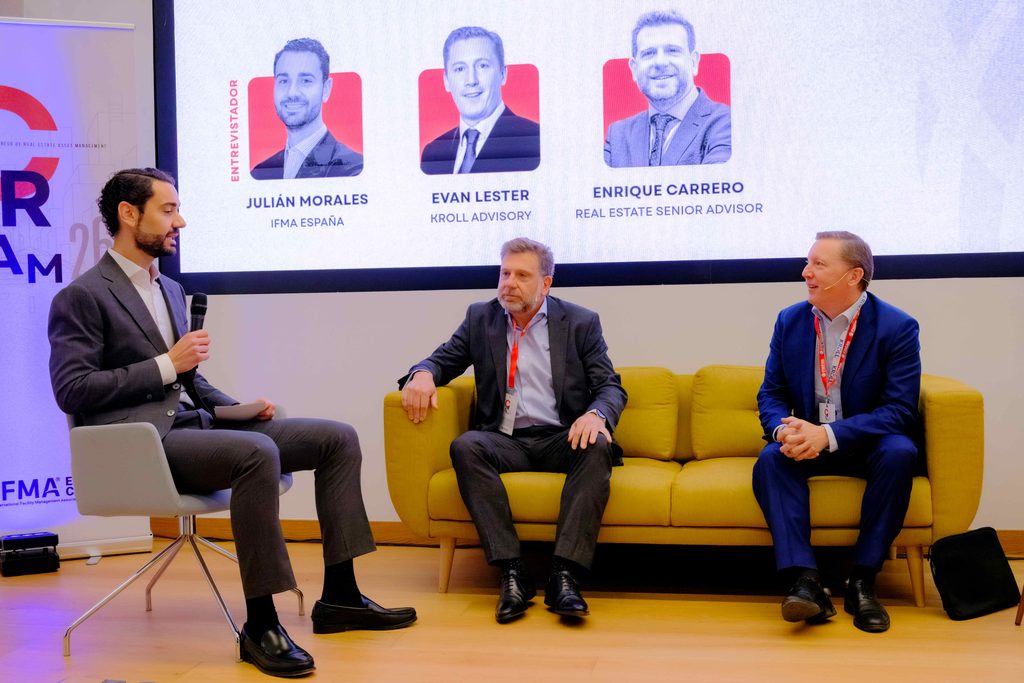
In the session on RICS and traditional valuation, with Enrique Carrero, expresidente de IFMA España, and Evan Lester (Kroll Advisory), interviewed by Julián Morales, Sponsor de la Comisión de Real Estate de IFMA España, speakers distinguished between market value and the value a property may have for a specific investor.
They noted that environmental, social and governance (ESG) criteria are already being built into valuations and that asset decarbonisation commitments will carry more weight. They also advocated the responsible use of artificial intelligence to support valuers, always with professional oversight and judgement.
Change of use: management and use are decided before construction
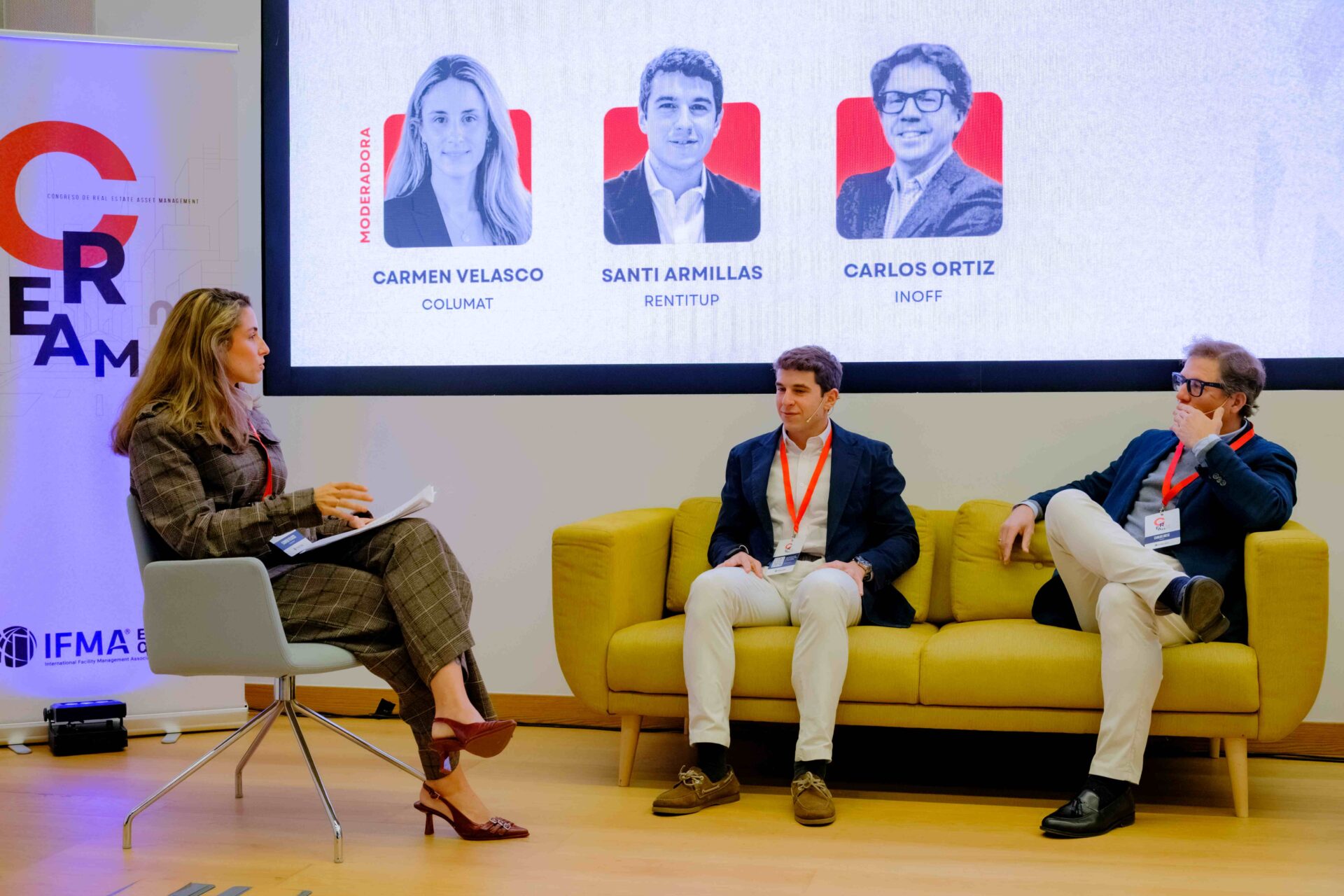
Carmen Velasco (Columat) moderated the panel with Carlos Ortiz (Inoff) and Santiago Armillas (Rentitup). To assess a change of use, the participants recommended reviewing the regulations, talking to the owners’ association, visiting the property and engaging a professional to help estimate its future return.
For hospitality and accommodation, the panel called for each project to be assessed according to the building and its location. Carmen Velasco focused on what happens after the works: defining from the outset who will manage the property, what services users will need and how they will be provided helps the building work from the day it opens.
Defining from the outset who will manage the property and what services users will need helps the building work from day one
FM and Real Estate, two sides of the same coin
In the closing session, IFMA España’s vicepresidente, Guillermo Montis, presented Real Estate and Facility Management as two sides of the same coin and linked financial decisions on buildings with their day-to-day management. Montis pointed to connectivity, renewable energy and new working models as the factors that are changing that management.
The event closed with the announcement that Bilbao will host the next edition of CREAM.
About IFMA España
IFMA España, the Spanish chapter of the International Facility Management Association, was founded in January 2011. Its aim is to promote knowledge of Facility Management and of the added value the discipline brings to business and society. Its president is Alfonso Díaz del Río (Serveo). Its members include independent professionals, in-house Facility Managers and service, consultancy and client companies, and it works along three lines: specialised events with room for networking, sharing FM knowledge and experience, and research through several working committees.