
Football stadiums no longer open just a few days a year: concerts, corporate events and retail spaces have turned them into infrastructure in almost daily use. Amid the wave of construction and refurbishment projects linked to the 2030 World Cup, Sika brought a warning backed by figures to Estadios Summit 2026: every euro cut from design and execution can be multiplied up to 125 times in repairs.
A business in daily use
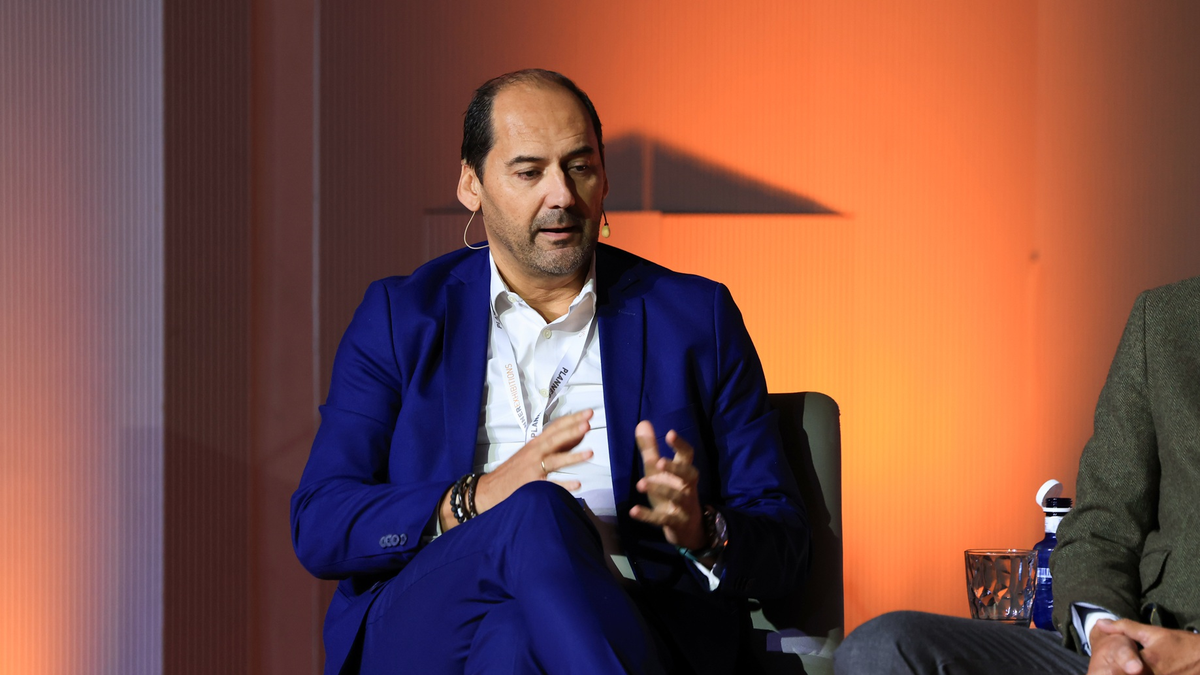
The event was held on 18 and 19 November at the Riyadh Air Metropolitano in Madrid, with Sika among its sponsors. The company took part in the round table “Gestionar grandes infraestructuras deportivas: eficiencia, operación y rendimiento a largo plazo” (Managing large sports infrastructure: efficiency, operation and long-term performance), with Ricardo Casino, Manager Direct Business Infrastructure at Sika; Alberto Díaz Torío, CEO of Soluciones Solurban; David Rosa, consultor de Infraestructuras de FIFA; and Conrado Sandoval, director de Desarrollo de la Competencia de Liga MX. The session was moderated by David Johera of Schneider Electric.
Casino focused on the new needs of stadium owners and operators. “A football stadium is no longer used occasionally, 15, 20 or 25 days a year; it is a business in almost daily use,” he explained. According to Casino, this shift means working with architects and engineering firms on more robust, reliable and durable solutions that optimise the service life of these facilities.
In this context, a water leak, a floor failure or any other construction defect can halt activity and cause significant financial losses. Casino therefore stressed the need to invest in a good design from the outset, select systems that guarantee quality and safety, and then ensure correct execution.
A football stadium is no longer used 15, 20 or 25 days a year: it is a business in almost daily use

Every euro saved can turn into 125
To illustrate the financial weight of design and construction decisions, Casino referred to the “law of fives”, formulated by Dutch engineer De Sitter more than four decades ago. The rule sets out an indicative ratio between the cost of preventing a construction problem and the cost of intervening once the damage has occurred.
Under this principle, every euro one tries to save in the early stages can be multiplied by 5 in maintenance, by 25 in minor repairs and by up to 125 in major repairs or refurbishment.
Casino applied it to a specific case: “If an owner or a contractor wants to cut €10,000 from the design by using cheaper materials or by not using specialised labour, it can mean €1,250,000 in additional costs over the stadium’s service life.”
The Sika executive stressed that material quality is not enough without rigorous execution. “A good system or a good product applied badly is a problem,” he said, highlighting the role of specialised contractors in ensuring construction solutions are installed correctly.
Saving €10,000 on design, materials or labour can mean €1,250,000 in additional costs over a stadium’s service life
Along the same lines, Alberto Díaz Torío argued for considering maintenance from the earliest design stages, choosing solutions that are not only durable but also repairable, and using monitoring technologies to anticipate problems.
Structure, flooring and waterproofing
Casino identified three areas in which construction systems are decisive for a stadium to function:
- Structural safety, both in new build and in the refurbishment, repair or strengthening of existing venues.
- Flooring, which must combine strength, durability and aesthetic performance, as floors are among the most visible and heavily used spaces for the public.
- Waterproofing, essential to prevent leaks and damp that could compromise activity.
To meet these needs, Sika offers families of solutions ranging from concrete systems, repair and structural strengthening to seamless flooring, high-performance coatings, waterproofing of roofs and below-ground structures and joint sealing. The company also champions durability as a criterion for selecting materials, as it helps extend service life, reduce repairs and make better use of the resources used in construction.
Among its references in major sports venues, Casino cited work at the Santiago Bernabéu, the RCD Espanyol stadium and the Spotify Camp Nou. The company is currently involved in projects related to the Nou Mestalla and to facilities in Las Palmas, Zaragoza, Vigo and Málaga.
Sika identifies three critical areas in a stadium: structural safety, flooring and waterproofing
2030 World Cup: thinking in decades, not opening day
Looking ahead to the 2030 World Cup stadiums (in Spanish), Casino made a recommendation to clubs and operators: think about service life and total cost optimisation rather than focusing solely on the initial investment. To that end, he called for good design, the choice of the most suitable solutions and high-quality execution by specialised professionals.
The aim, according to Sika, is for the investments now under way to meet not only immediate needs but also to deliver safe, efficient facilities ready to operate for decades.

