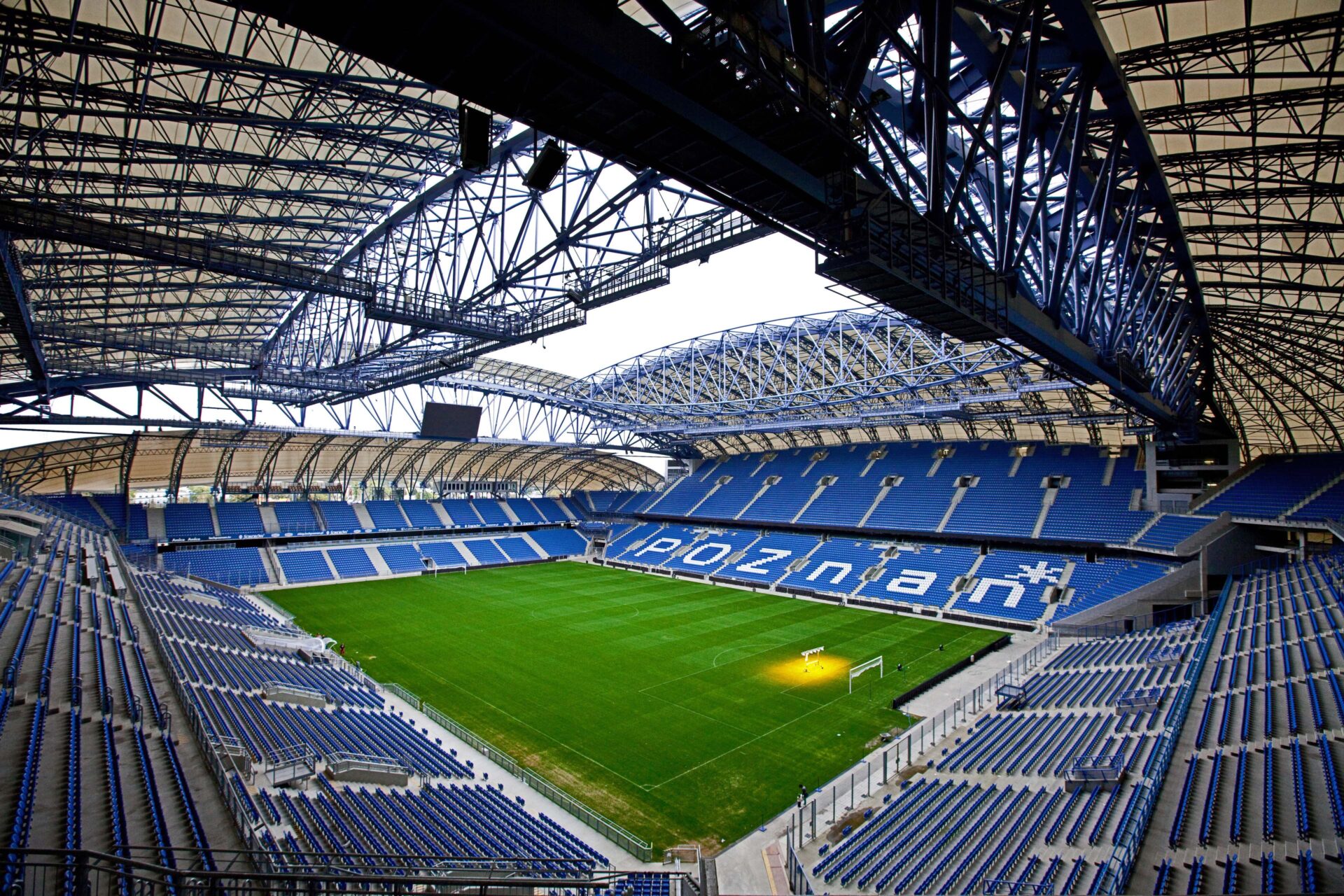

The joint bid by Spain, Portugal and Morocco for the 2030 FIFA World Cup has turned stadiums into one of the major construction fronts in the Iberian Peninsula and North Africa: of the 22 venues that have featured in the process, 14 are being refurbished, 2 rebuilt and 2 are new. Construnews has cross-referenced the data from its forthcoming stadium monograph, sponsored by Sika, with the international stadiums and arenas brochure from Sika, which sets out in four technical areas and three design challenges how the company works on this type of infrastructure.
A decade of major stadium works
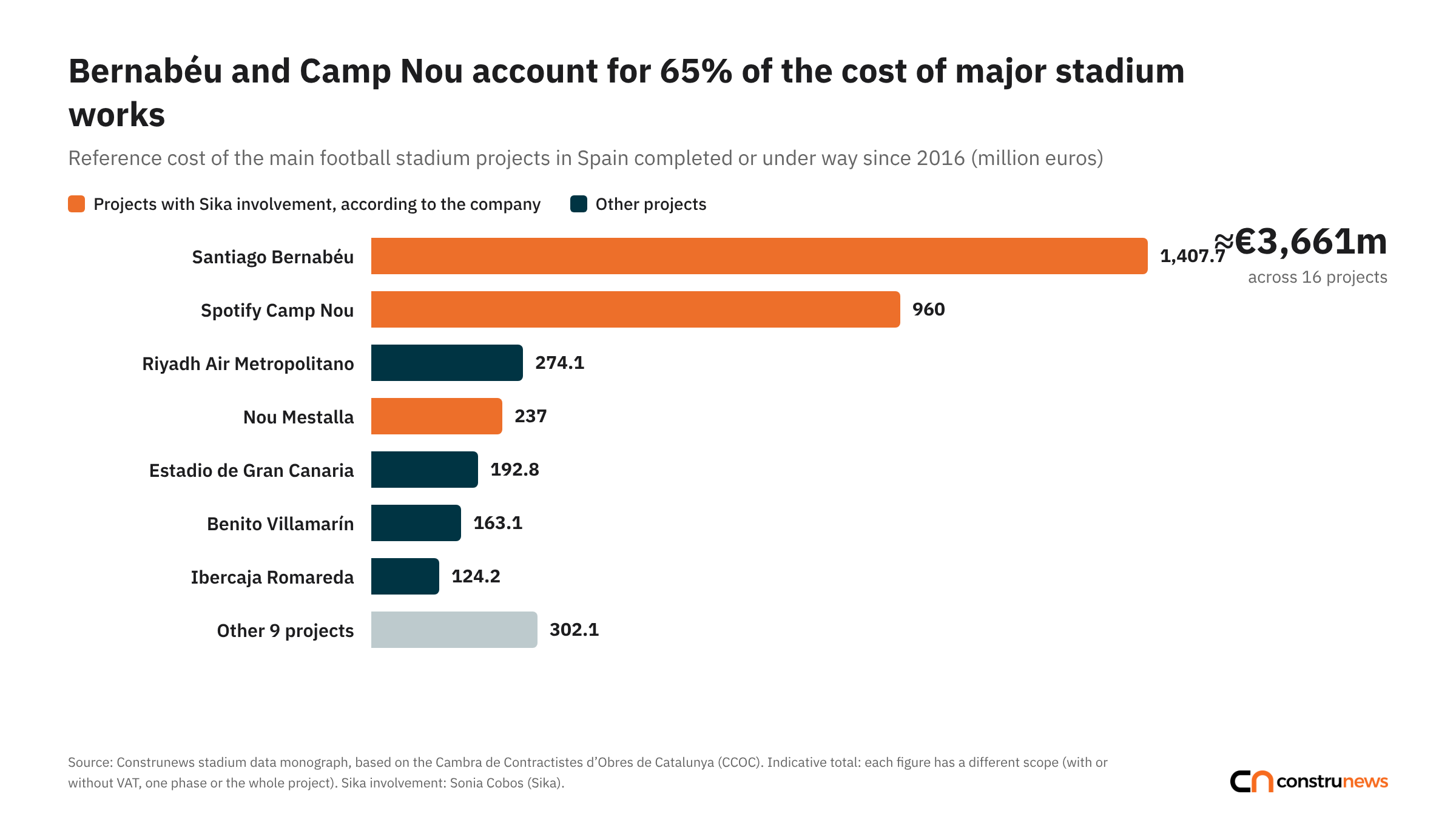
According to data compiled by Construnews from the Cambra de Contractistes d’Obres de Catalunya (CCOC), the 16 largest football stadium projects completed or under way in Spain since 2016 have a combined reference cost of around 3,661 million euros. It is an indicative total, since each figure has a different scope (with or without VAT, one phase or the whole project).
Two projects account for 65% of that amount: the Santiago Bernabéu, at 1,407.7 million (38%), and the Spotify Camp Nou, at 960 million (26%). They are followed by the Riyadh Air Metropolitano (274.1 million), the Nou Mestalla (237), the Estadio de Gran Canaria (192.8), the Benito Villamarín (163.1) and the Ibercaja Romareda (124.2). Of the 16 projects, nine are complete, six under way and one awarded.
Sika has worked on several of these venues. According to Sonia Cobos, Key Owner & Specification Manager at the company, Sika has carried out work at the Santiago Bernabéu, the RCD Espanyol stadium and the Spotify Camp Nou, and has been involved in projects such as the Nou Mestalla and other sports facilities in Las Palmas, Zaragoza, Vigo and Málaga.
The pressure is not limited to Spain. 18 stadiums remain in contention in the bid, with 1,125,130 seats according to FIFA’s 2024 evaluation, and FIFA will choose the host venues after visiting them in November and December 2026. Morocco is allocating between 1,759 and 1,898 million euros to its stadium programme, which includes the Grand Stade Hassan II, with 115,000 seats, set to be the largest in the three countries.
The 16 largest stadium projects in Spain since 2016 add up to around 3,661 million euros; the Bernabéu and Camp Nou account for 65%
Three design challenges
The brochure Your trusted partner for stadiums and arenas, published by Sika Services AG in November 2025, identifies three challenges that shape the design and maintenance of these buildings.
The first is aesthetics and brand identity. Stadiums are urban landmarks, and owners and architects often ask for customised colours, textures and integrated logos that reflect the character of the club or venue, without sacrificing functionality or durability against weathering, UV exposure and foot traffic.
The second is net-zero and sustainability goals: reducing energy use, extending service life and choosing low-emission, low-maintenance materials. Sika presents its systems as a way to reduce life-cycle costs and provide the documentation required by certifications such as LEED or BREEAM.
The third is structural complexity and joint performance. Long spans, crowd vibration, temperature changes and wind loads subject the structure to significant stress and movement, a challenge that is compounded in refurbishments. To address this, the company offers solutions to improve concrete strength and joint sealing systems designed for extreme movement, watertightness and seismic and passive fire protection requirements.
Four technical areas, from basement to roof
Roofing. Stadium roofs must be watertight and durable, withstand external exposure and physical stress and, at the same time, meet the architect’s vision in shape and colour. Sika works with its Sarnafil®, Sikaplan®, Sikalastic® and SikaShield® systems, with FPO, PVC, bitumen and liquid-applied technologies, and with skilled applicators.
Concrete. Precast or in-situ concrete is the structural foundation of the stadium. The company provides admixtures to improve quality, performance, durability and speed of production, with the aim of reducing delays and defects on fast-track projects. Its SikaFiber® software helps calculate fibre dosage and slab design.
Flooring. Concourses, kitchens, restaurants, lounges, plant rooms and car parks need durable floors that meet technical, sustainability and low-VOC requirements. The brochure highlights low-emission, low-odour, low-maintenance, fast-curing and easy-to-apply solutions.
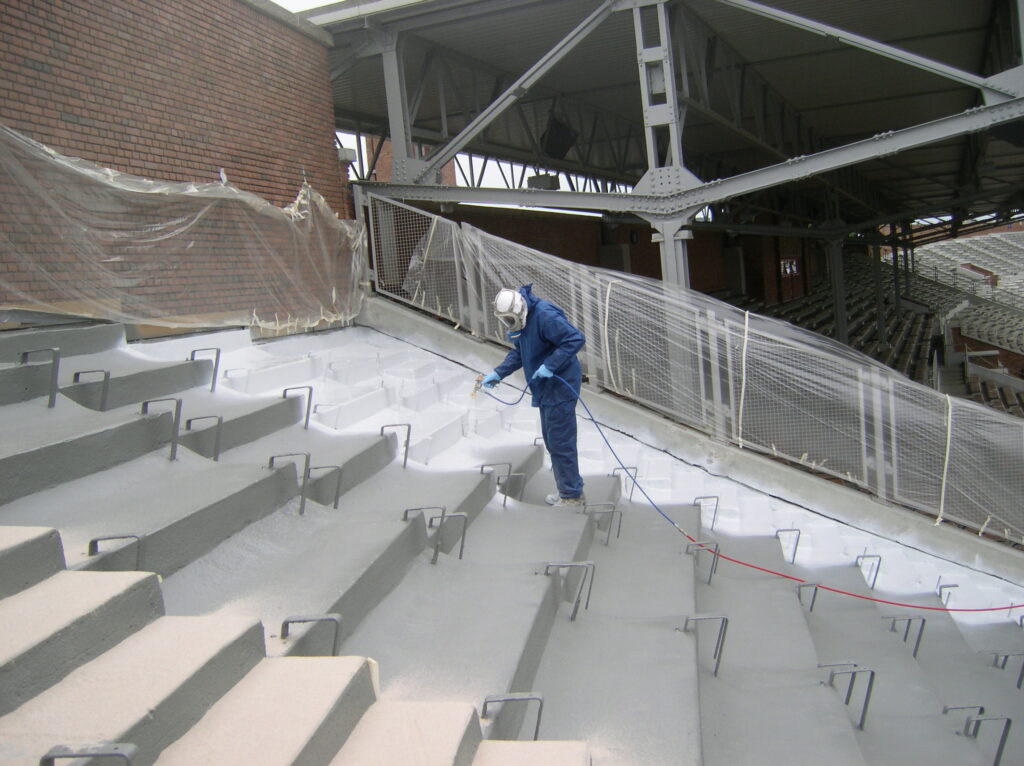
Basement and slab-on-grade waterproofing. From underground car parks to podium terraces and stands, waterproofing must adapt to the structure. Sika combines SikaProof® membranes and Sikalastic® liquid-applied systems with Sika® Waterbar FB-125, SikaFuko® injection hoses, Emseal®/Wabo® joint systems and Sikaflex® sealants.
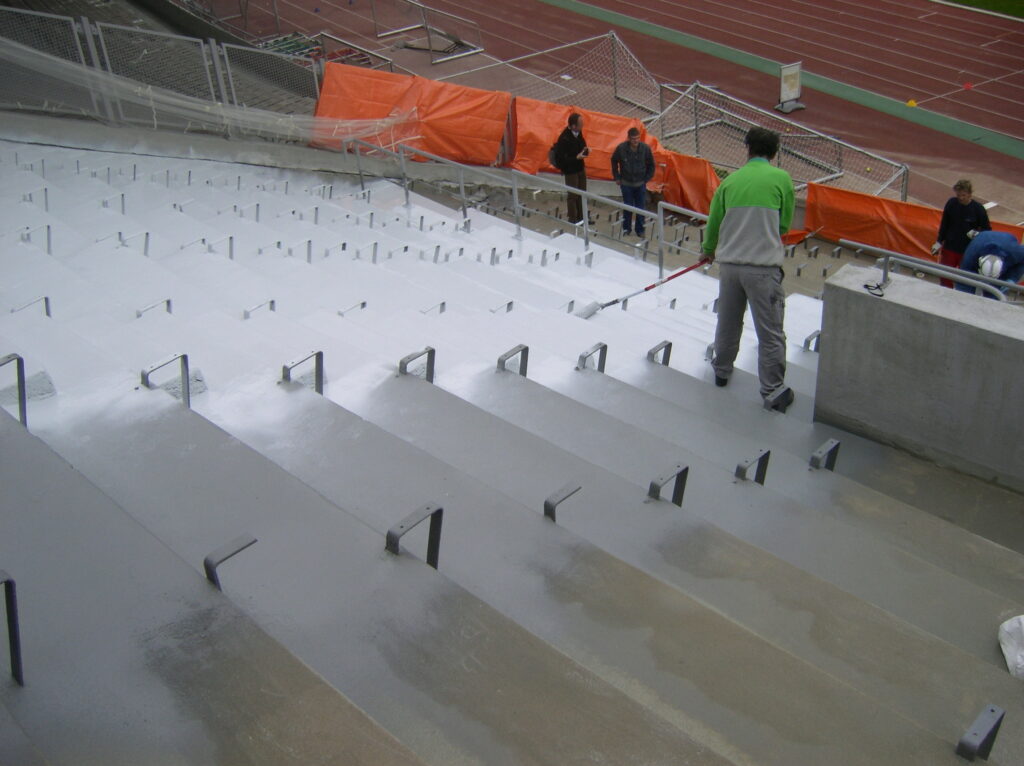
Crowd vibration, long spans and temperature changes subject the structure to stresses that are compounded in refurbishments
Life cycle and digitalisation
The brochure also covers the stages of the life cycle with specific examples. At the product stage, it cites the recycled content of Sarnafil® membranes and SikaGrout®-800 and SikaGrout®-340+ grouts. In concrete production, Sika® ViscoCrete® admixtures reduce water and cement content and allow higher cement replacement levels and the use of recycled aggregates; SikaRapid® helps reduce clinker content, and Sika® Retarder® avoids waste from surplus concrete. At end of life, the Sarnafil® AT membrane holds Cradle to Cradle silver certification.
In parallel, Sika offers digital tools grouped under SikaVision® to monitor, collaborate, optimise and predict key aspects of construction and refurbishment projects, and provides data for project teams’ BIM models.
Beyond the World Cup stadiums
The Construnews monograph also covers the other side of the sports estate: 2,189 public contracts awarded in Spain and Portugal between 2021 and 2025 for works, equipment and maintenance of football pitches, worth 444.9 million euros. Turf accounts for 217.1 million, almost half; general works, 138.6 million; and changing rooms and stands, 68.5 million across 406 contracts.
This is where Cobos places the World Cup’s legacy. “It would be a mistake for all our attention to be focused exclusively on the big stadiums,” says the Sika manager, who argues for a refurbishment and modernisation plan for grassroots sports facilities.