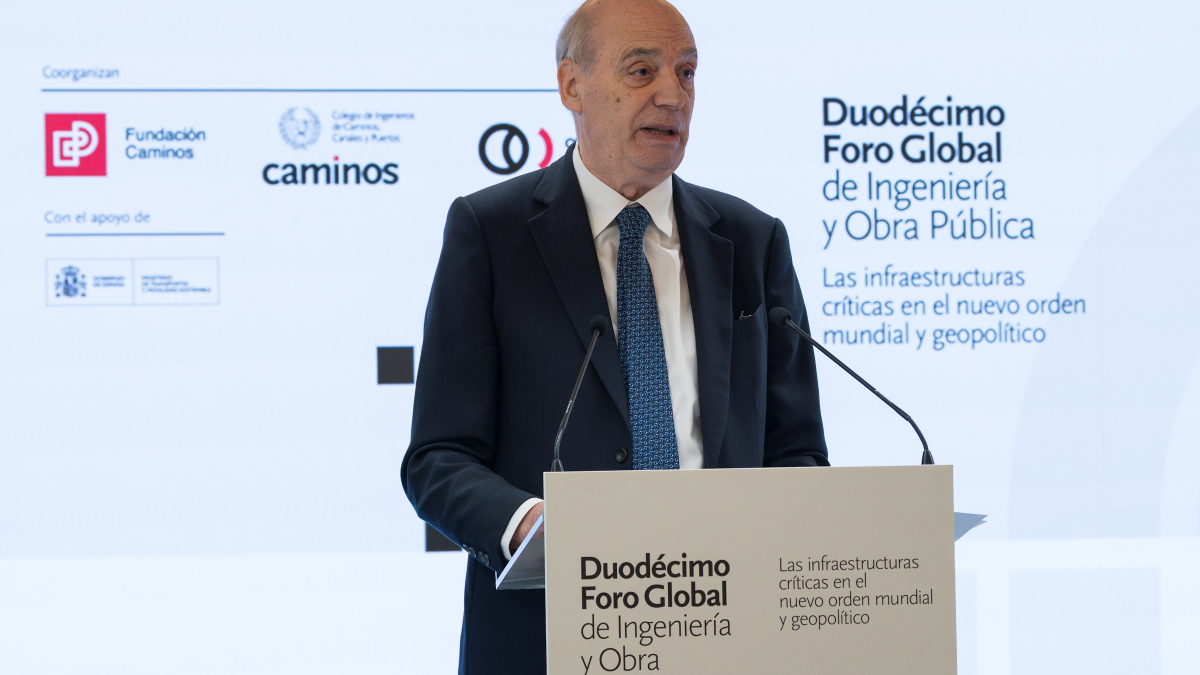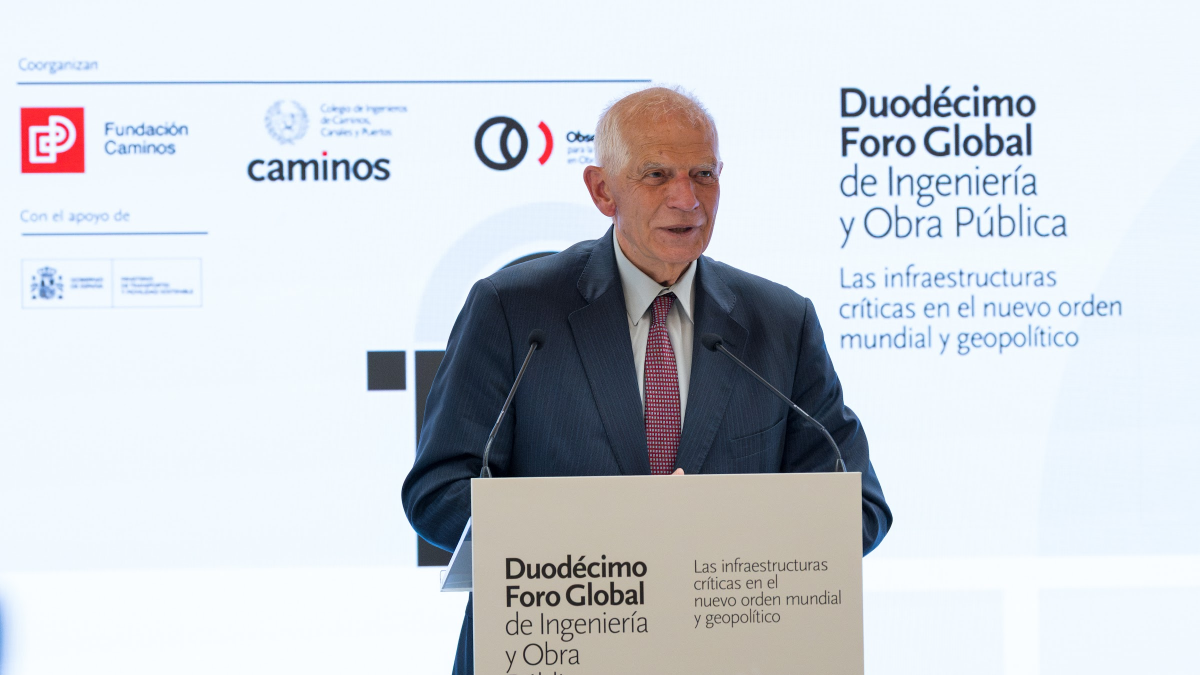

The Colegio de Ingenieros de Caminos, Canales y Puertos (Spanish Association of Civil Engineers) and the Fundación Caminos held the twelfth edition of the Foro Global de Ingeniería y Obra Pública (Global Engineering and Public Works Forum) in Madrid on 25 November, under the theme “Critical infrastructure in the new world and geopolitical order”. Josep Borrell and José Manuel García-Margallo opened the discussion on Europe’s place in the world.
A Europe without geopolitical weight
The forum was opened by Josep Borrell, ex vicepresidente de la Comisión Europea, who said that the old continent “unfortunately is not a geopolitical power“. Among the reasons, Borrell noted that “Europe has no cloud“, the system through which “all the information that makes the world work” flows, along with its infrastructure. He added that in Europe “the political division is too great for us to play the role of a geopolitical actor”.
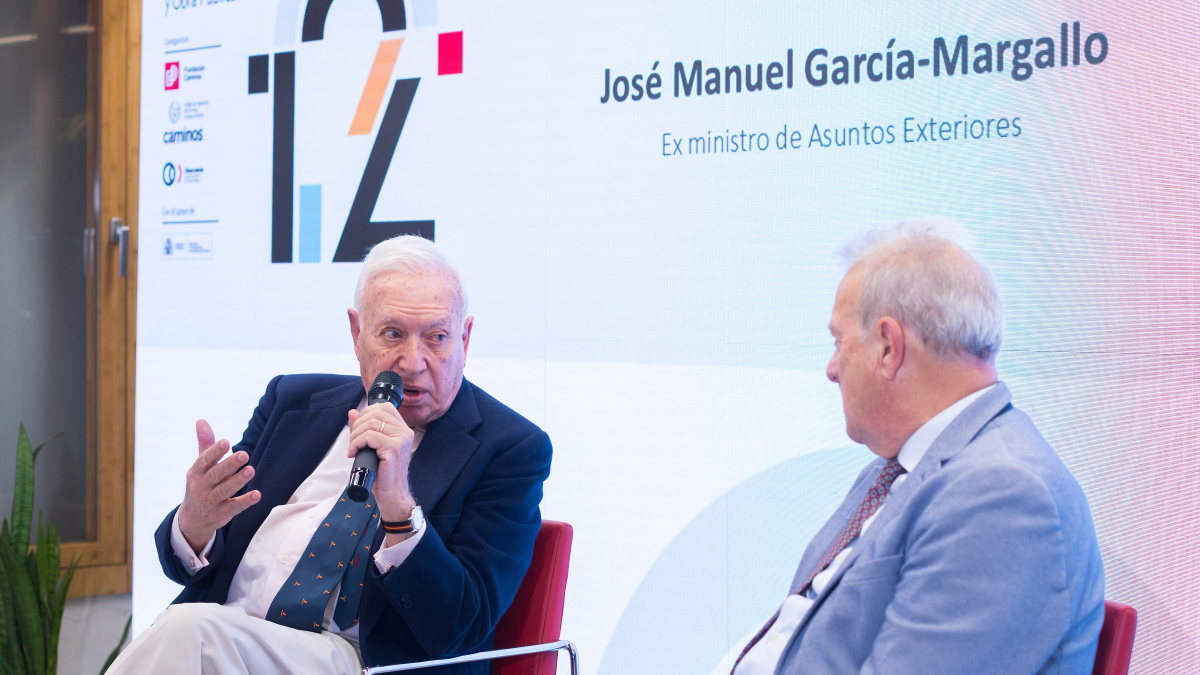
Former Spanish Foreign Minister José Manuel García-Margallo, ex ministro de Asuntos Exteriores, shared that analysis and warned that the European Union has been left out of the major global decisions: “Europe is not counted on for anything.”
García-Margallo argued that “the only option left to us is a federal Europe“. In his view, the “United States of Europe” must be promoted, since the continent has sufficient assets, such as the single market and a reserve currency, but lacks “the political will”.
Josep Borrell: “Europe has no cloud”, the system through which all the information that makes the world work flows
Critical infrastructure, a priority for the next parliamentary term
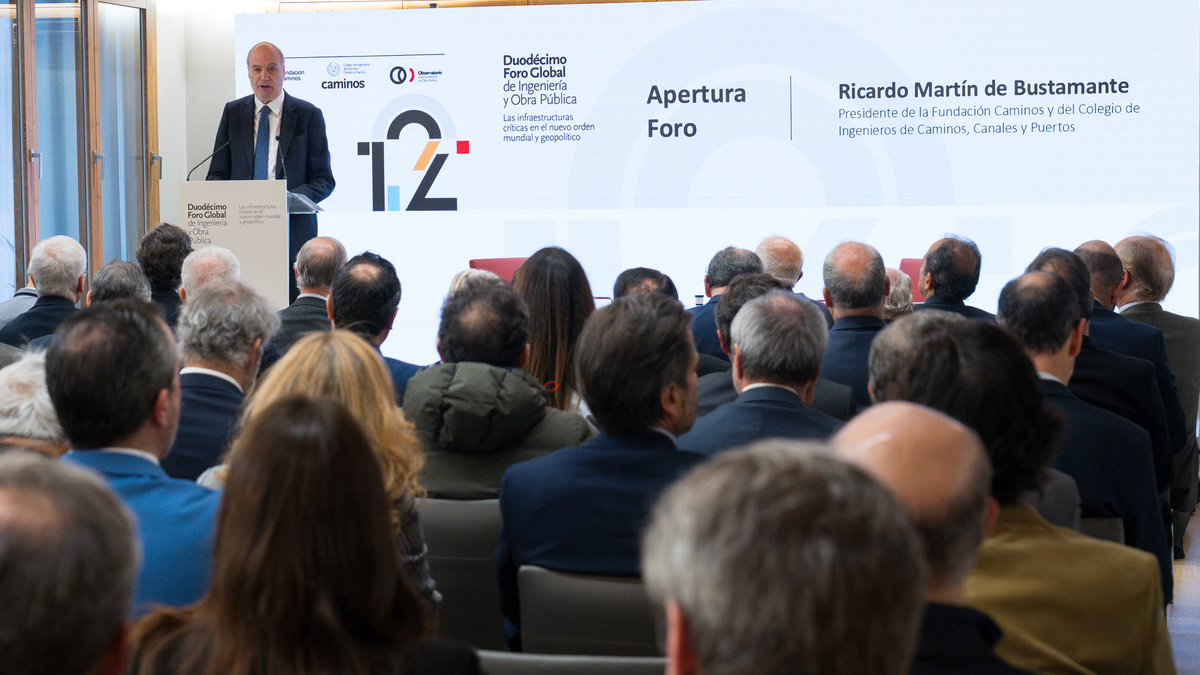
Against this backdrop of European vulnerability, affected by the wars between Iran and Israel and between Russia and Ukraine, Ricardo Martín de Bustamante, presidente del Colegio de Ingenieros de Caminos, Canales y Puertos, called for the next parliamentary term to “guarantee the security of critical infrastructure in Spain“. He was referring to “energy, transport and water networks, as well as those of data centres and artificial intelligence systems“.
Ports as nodes of power
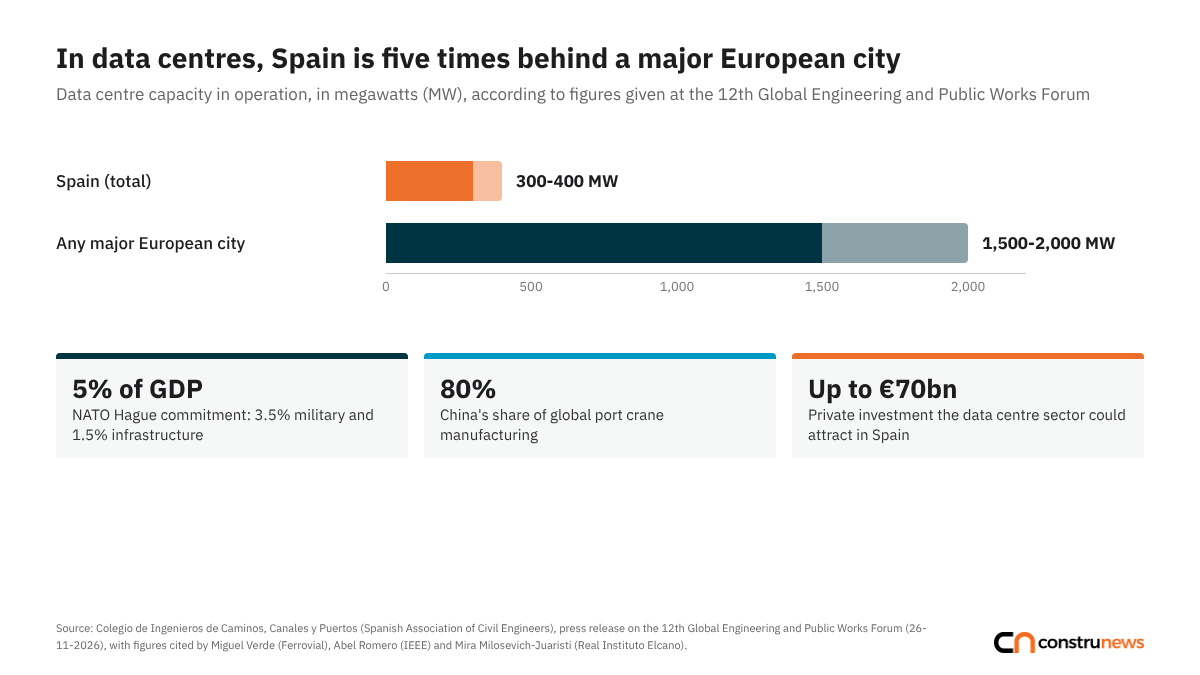
The forum examined the role of ports as nodes of international power. Abel Romero, capitán de navío and analyst at the Instituto Español de Estudios Estratégicos (Spanish Institute for Strategic Studies), described China’s advance in its pursuit of maritime hegemony: “China produces 80% of the world’s port cranes with software that is also Chinese, which gives it enormous information power to know what moves through half of the world’s main ports.” Romero warned that, although the country’s initial interest is commercial, these facilities have a “dual-use potential” and future military intelligence value.
Defence: an opportunity for engineering
The forum discussed the agreement reached at the NATO Hague Summit to raise defence spending to 5% of GDP. Mira Milosevich-Juaristi, of the Real Instituto Elcano, stressed that, of that percentage, “3.5% is earmarked for investment in weapons, it is purely military, and 1.5% for infrastructure“.
According to Luis Villarroya, vicepresidente del Colegio de Ingenieros de Caminos, this allocation means “doubling Spain’s usual investment in public works“, so “the future offered by defence investment is a great opportunity for civil engineers and for construction and engineering companies”.
Of the 5% of GDP pledged within NATO, 3.5% is purely military spending and 1.5% goes to infrastructure
Cybersecurity: from digital to physical
The impact of cyberattacks on essential services was another focus of the forum. Major General Federico Juste de Santa Ana, segundo comandante del Mando Conjunto del Ciberespacio del Estado Mayor de la Defensa (Spain’s Joint Cyberspace Command, Defence Staff), explained that “Spain is the most cyberattacked country in Europe, and the third in the world by Russian and Chinese activists, after Israel and Ukraine”.
The general also warned of the trend to move “from the digital to the physical“, with cyberattacks on dams or power grids that have real consequences in the physical world.
Energy transition and nuclear power
The energy debate highlighted Spain’s opportunity to increase electricity consumption. Nemesio Fernández Cuesta, ex secretario de Estado de Energía, said that electricity consumption could be doubled by 2050. To achieve this, he advocated a model based on “renewables, storage in both batteries and pumped hydro, and keeping the existing nuclear power plants open” to ensure competitiveness.
Along the same lines, José Bogas, consejero and ex CEO de Endesa, said that “nuclear power provides 24-hour security, system stability and cost competitiveness”.
Investment, financing and procurement
To finance the country’s investment needs, which the Colegio puts at €413 billion over ten years in the National Infrastructure Strategy 2027-2031 drawn up by the institution, the speakers called for regulatory certainty and public-private partnership.
Alejandra Kindelán, presidenta de la Asociación Española de la Banca (Spanish Banking Association), called for “regulatory simplification and regulatory and tax predictability“. Enrique Serra, CEO de CBNK, said that “cost uncertainty is a very big barrier” and backed the Colegio’s proposal to revise the Deindexation Act (Ley de Desindexación): “We need viable projects with enforceable contracts, contracts into which you can build extraordinary costs.”
Rafael Miranda, consejero de Brookfield Corporation, highlighted the abundance of global private capital, noting that “there is great competition over where that money can be invested” and that investors will only go to the most attractive countries that guarantee “stable frameworks and adequate returns“.
Data centres: five times behind
The speakers also stressed the need for Spain to host data centres. Miguel Verde, CEO de Infraestructura Digital de Ferrovial, said that “in Spain there are between 300 and 400 MW in operation in data centres, while any major European city develops between 1,500 and 2,000 MW, so we are five times behind“.
Verde argued for the urgent need to establish competitive regulatory frameworks so that “data sovereignty lies in Spain” and to attract up to €70 billion of private investment into the sector.
Miguel Verde (Ferrovial): Spain has 300-400 MW of data centre capacity; a major European city, 1,500-2,000 MW