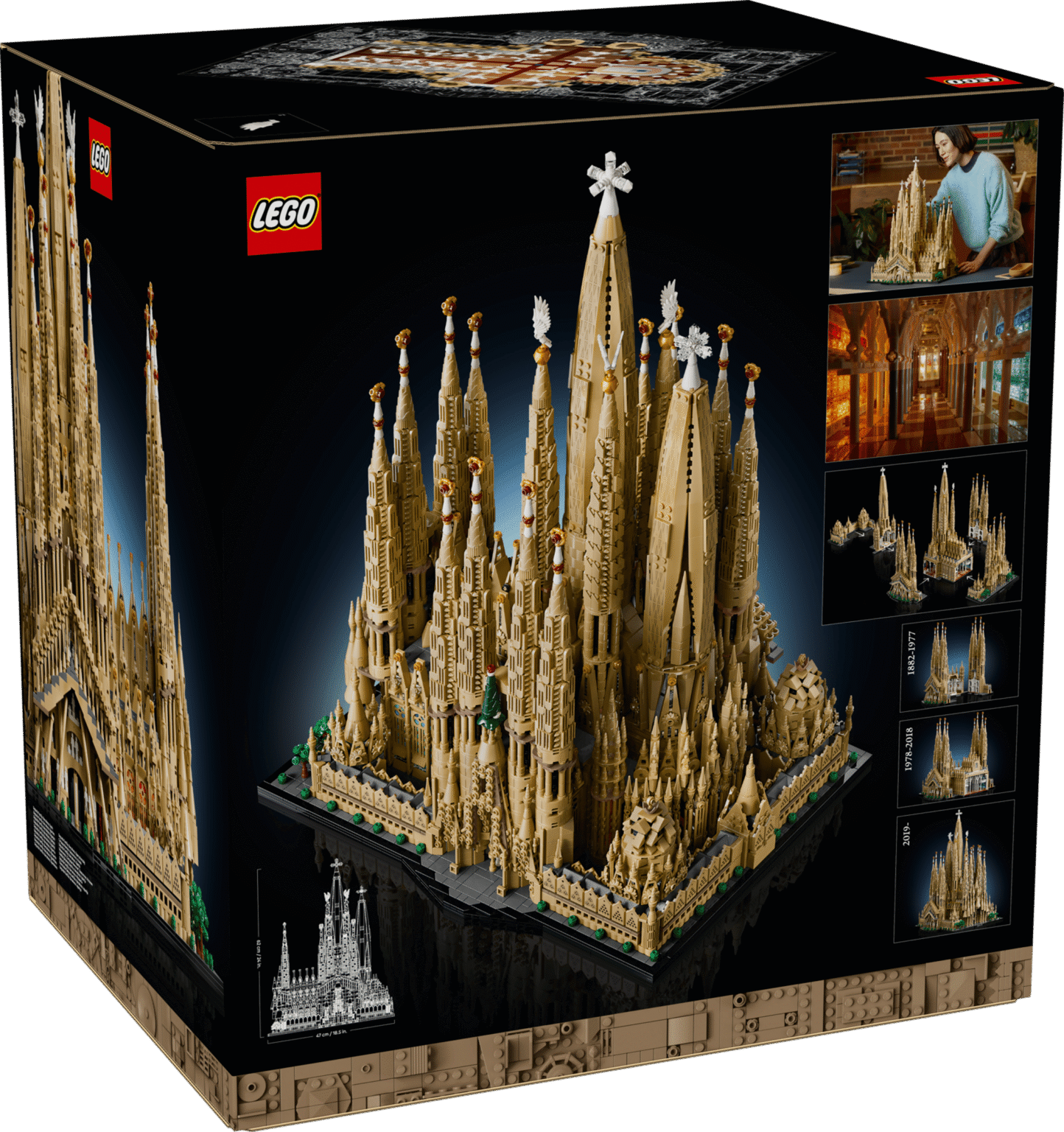


LEGO has detailed the development of its model of the Sagrada Familia Basilica (reference 21065), part of the LEGO Architecture series. With 12,060 pieces, it is the set with the most elements in the company’s history and its most ambitious architectural challenge. It goes on sale tomorrow, 1 November 2026.
The construction and scale-modelling sectors are witnessing an unprecedented technical milestone. The LEGO company has revealed how it developed the Sagrada Familia Basilica set (21065), which stands as the most ambitious and largest-scale architectural challenge in the brand’s history.
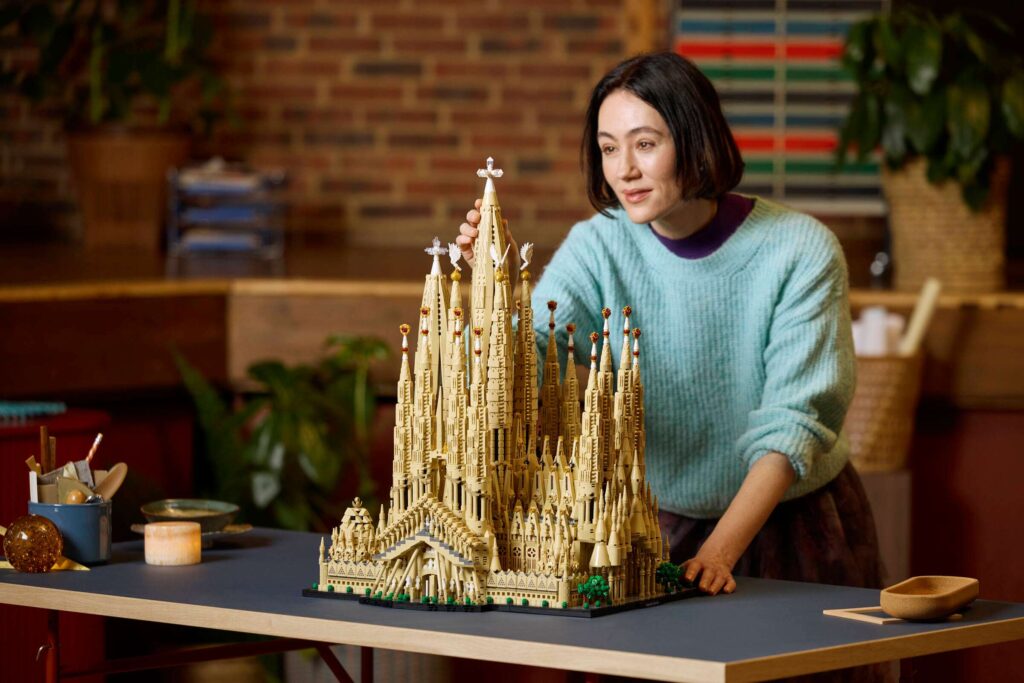
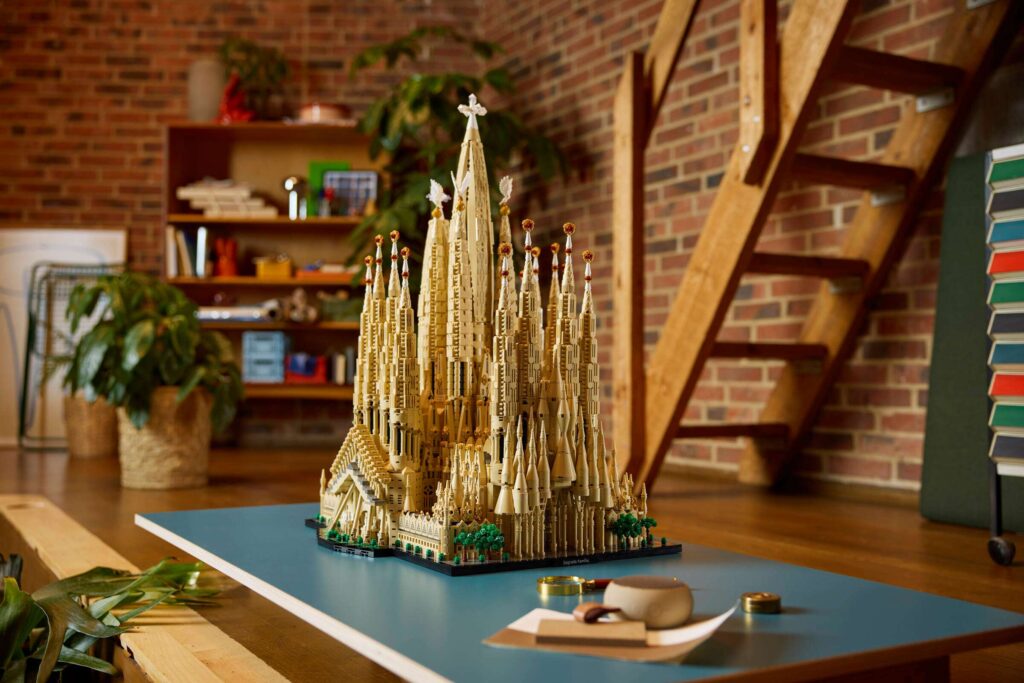
With a total of 12,060 pieces and a height of approximately 62 centimetres, the model not only breaks the firm’s absolute record for elements but also translates Antoni Gaudí’s geometric and engineering principles into the interlocking brick system.
Scale engineering: a build that follows the temple’s chronology
The model’s design was led by designer and researcher Rok Žgalin Kobe, an architect by profession who holds a PhD on the influence of the environment on contemporary construction expressions.
Unlike typical models, which are assembled in horizontal layers, set 21065 faithfully replicates the historical construction process of the real temple. Assembly begins with the crypt and the Nativity façade, the only section completed during Gaudí’s lifetime; continues with the Passion façade and the interior naves; and culminates in the Glory façade and the central towers.
The set does not follow the conventional layer-by-layer method; it replicates, section by section, the chronology and construction process of the original basilica.
To ensure the structure’s stability without altering Gaudí’s aesthetic, the design team turned to highly inventive technical solutions drawn from the existing catalogue. The load-bearing structure of the interior naves recreates the concept of a forest of columns using inverted stacks of pieces originally designed as candles for minifigures. In addition, the façades are fully removable, allowing the interior space and the building’s floor plan to be seen.
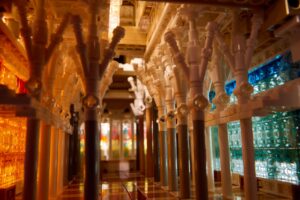
The lighting behaviour of Gaudí’s temple has been carried over to the model through the integration of more than 500 transparent pieces. These pieces filter light to reproduce the building’s solar orientation: cool blue and green tones on the eastern side of the Nativity façade (morning light) and warm red and orange hues on the Passion façade (afternoon light). The upper skylights emulate the filtering of light through a tree canopy, as devised by the architect from Reus.
More than 500 transparent elements recreate the gradation of light inside the temple, with cool tones to the east and warm tones to the west according to solar orientation.
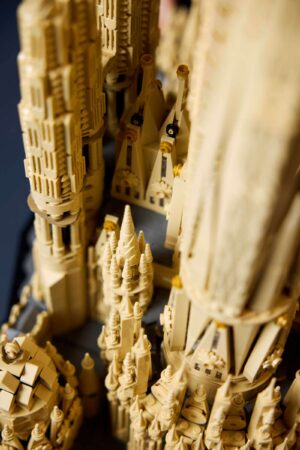
The model’s meticulous architectural details include 533 radiator grilles, used as mouldings and façade textures; 100 conical pieces, originally designed as unicorn horns, which crown the pinnacles of the spires; and 42 statues distributed across the portals. In addition, the geometric origin of the floor plan is symbolically marked by a blue cover located beneath the central tower dedicated to Jesus Christ.
The versatility of the LEGO system, with no new pieces
From a manufacturing standpoint, one of the most notable premises is that no new pieces were designed for this set. All 12,060 elements belong to the standard LEGO System, demonstrating the geometric flexibility of classic pieces in resolving the complex hyperboloid and paraboloid forms characteristic of Gaudí’s language.
The model does without moulds or newly created pieces, resolving Gaudí’s complex hyperboloid geometry exclusively with standard system elements.
A launch marking the centenary of Gaudí’s death
The set was officially presented on 4 June 2026, as part of the centenary of Antoni Gaudí’s death, and reaches the market tomorrow, 1 November 2026, with pre-orders already open and an official price of 759.99 euros (749.99 euros, according to preliminary distribution estimates in certain markets).
The launch turns the building experience into an immersive exercise in heritage analysis and scale construction. Detailed information on the model’s conception process and the designer’s statements can be found in LEGO’s official publication.